Iseki engines

   / Iseki engines #21  
Axlehub----The comment on using distilled water is pretty important. The township I live has a pretty high level of calcium or other minerals that
you can really see in water heater deposits or faucet/shower heads clogging over time. And my well water has an unbelievable amount of iron in it.
This kind of stuff can really clog up radiators if you use that kind of water in them.
 
   / Iseki engines #22  
I think that's good logic Axlehub and agree almost completely. I have a different view of one topic which is cooling. I have a BX2200 which I've used for 16 years, have bought 2 others (used) as a service to other family members, etc. and I firmly believe there is a cooling design problem with the BX series. All these machines have the same issue about cooling. By the way I also have two B2150 4 cyl non-BX tractors that have NONE of this disease whatsoever. All the other tractors I ever owned (Deere, Massey Harris, Massey Ferg) had huge overkill in cooling capacity.

The problem is this: the BX series tractors, operated for longer periods of time in hot outside air temps (90's and more) while pulling a significant load, (like that of a 60 inch MMM deck mowing grass without stopping for an hour or two) will get hot. Period. Mine runs at the top end of the black range very near red under those conditions and always has -- that is with all the due diligence of cleaning the screen with compressed air, back blowing the radiator, cleaning the external shroud around the battery that lets cooling air in, etc.The slightest overlooking of care and it will go into the red under these conditions. These little buggers just get hotter than they SHOULD. Every once in a while one gets out of hand requiring remedial attention (there have been several TBN threads about it.) All the discussion to date contains a lot of speculation, the usual due diligence described above, etc. but NONE that I have ever seen get to the bottom of the problem and NONE have identified the real cause.

By process of elimination I feel I know what the cause MUST BE -- namely too small a water pump. The radiator is way bigger than necessary for that size a little engine. The fan likewise. The air paths are overkill and adequate (if cleaned out religiously...) , etc. I would bet some cash that a larger capacity water pump will cure the marginal issue. And it is a MARGINAL issue -- one you can get by with, one you can live with "BUT it ain't right!" I've never taken the time (nor invested a dime) to find out if the slightly larger Kubota engines' water pumps will fit the BX engines. I'd love to try it if I could find one that fits.
We have a BX2660 and it has had problems with cooling, but most stem from junk in the fins of the radiator. Attached is a picture of the radiator when I cleaned it and replaced the thermostat this spring.
IMG_20180623_140702.jpeg
Most of that was not visible with the radiator in place.

Aaron Z
 
   / Iseki engines #23  
That's a question I can't answer. . . But a good one to consider.

Another good question is. . . has distilled water been used consistently for the radiator needs.? Here's why that is important. Let's say there has never been a tendency for the temp to rise. In that scenario it's unlikely there is a restriction point so iron or other buildup is not a big issue (though I'd still use distilled water). By if there is already a history of temp rising (for whatever reason) . . . . Water/fluid quality becomes a much bigger issue. Think of it like a creek or a river stream, any spot that shows flow restriction automatically become a collection apt for silt or leaves or branches. Same story in coming systems. And compounding the issue is if water is coming from a farm or country well, you can have non-solable and soluble iron or other minerals. Any of those is a problem. . but too often users think only in terms of water 'clarity".

Coming from our well we have iron soluble water . . . taste great and clear as the glass it's in. . . . . but let that water stand in the glass for 4 days and the irony settles to the bottom and makes a believer of you to have a whole house filter right after the water line comes in the house.

Using DI water, distilled water or highly pure water is not recommended in and around metals. Pure water is mild chelant and will bind with metals it contacts. Best to use antifreeze or an appropriate automotive coolant.
 
   / Iseki engines #24  
Using DI water, distilled water or highly pure water is not recommended in and around metals. Pure water is mild chelant and will bind with metals it contacts. Best to use antifreeze or an appropriate automotive coolant.

Having caused me to rush to the dictionary to learn what a chelant might be (I figured you had misspelled some common word) you precede that with an unexplained abbreviation DI. Chasing the behavior of ions is rare among us tractor people...us engineers included. Then you really puzzled me saying it is best to use antifreeze or appropriate auto coolant ? Huh ? No antifreeze commonly used in liquid cooled internal combustion engines is used alone. It is for all practical purposes ALWAYS mixed 50/50 with plain old tap water, typical ions, impurities and all. Sorry def, by this time I lost your point.
 
   / Iseki engines #25  
Having caused me to rush to the dictionary to learn what a chelant might be (I figured you had misspelled some common word) you precede that with an unexplained abbreviation DI. Chasing the behavior of ions is rare among us tractor people...us engineers included. Then you really puzzled me saying it is best to use antifreeze or appropriate auto coolant ? Huh ? No antifreeze commonly used in liquid cooled internal combustion engines is used alone. It is for all practical purposes ALWAYS mixed 50/50 with plain old tap water, typical ions, impurities and all. Sorry def, by this time I lost your point.

JWR, my point was, save the DI (deionized) or distilled water for use in your FLA (flooded lead/acid) storage battery or the high pressure steam circuit in a power plant (the water in these power plants is often called holy water due to its purity).


You are correct, the coolant in engines is frequently mixed with tap water in a 1/1 ratio. Automotive coolant is deliberately formulated with silicates and other dissolved solids so as to satisfy the solution's appetite for metal ions, provide corrosion inhibitors, lubrication as well as enhancing heat transfer and the obvious...lowering the freezing point.

FYI, the so-called distilled water you buy in jugs at the store these days is rarely actually purified by distillation. It is most often purified by passing it through mixed bed ion exchange resin columns (deionizing) to remove both cations and anions. Distillation, as some of my back woods brothers know so well, requires the use of heat and lots of tubing, is slow and costly, and in the case of the fellas out in the woods, illegal.
 
Last edited:
   / Iseki engines #27  
JWR, my point was, save the DI (deionized) or distilled water for use in your FLA (flooded lead/acid) storage battery or the high pressure steam circuit in a power plant (the water in these power plants is often called holy water due to its purity).


You are correct, the coolant in engines is frequently mixed with tap water in a 1/1 ratio. Automotive coolant is deliberately formulated with silicates and other dissolved solids so as to satisfy the solution's appetite for metal ions, provide corrosion inhibitors, lubrication as well as enhancing heat transfer and the obvious...lowering the freezing point.

FYI, the so-called distilled water you buy in jugs at the store these days is rarely actually purified by distillation. It is most often purified by passing it through mixed bed ion exchange resin columns (deionizing) to remove both cations and anions. Distillation, as some of my back woods brothers know so well, requires the use of heat and lots of tubing, is slow and costly, and in the case of the fellas out in the woods, illegal.


Def,

I'm confused by your posts. Some of the purest water available is evaporative condensed water. Its cheap and easy to obtain. It can come from your dehumidifier on a air conditioning unit or portable dehumidifier.

The whole point of using clear water is to use water that lacks metals or minerals - and when combined with antifreeze - is both an efficient cooling fluid as well as capable of dealing with extreme heat or extreme cold conditions.

Virtually no one would choose to use any normal antifreeze undiluted because it would not be as efficient as a diluted mixture. Straight antifreeze would limit the cooling capacity of the radiator system because of its thickness and lack of temperature transfer that a proper diluted mixture offers. Literally stated - virtually all common antifreezes are specifically formulated and manufactured to function with water for best operationg and protection of the surfaces of radiators and cooling system/engines etc..

Outside of high end special purpose anti freezes - the instructions on all others recommend water and specifically NOT tap water or well water but rather distilled water (not mineral water or spring water etc.).

jmho
 
   / Iseki engines #28  
Def,

I'm confused by your posts. Some of the purest water available is evaporative condensed water. Its cheap and easy to obtain. It can come from your dehumidifier on a air conditioning unit or portable dehumidifier. Question, would you drink it?

The whole point of using clear water is to use water that lacks metals or minerals - and when combined with antifreeze - is both an efficient cooling fluid as well as capable of dealing with extreme heat or extreme cold conditions.

Virtually no one would choose to use any normal antifreeze undiluted because it would not be as efficient as a diluted mixture. Straight antifreeze would limit the cooling capacity of the radiator system because of its thickness and lack of temperature transfer that a proper diluted mixture offers. Literally stated - virtually all common antifreezes are specifically formulated and manufactured to function with water for best operationg and protection of the surfaces of radiators and cooling system/engines etc..

Outside of high end special purpose anti freezes - the instructions on all others recommend water and specifically NOT tap water or well water but rather distilled water (not mineral water or spring water etc.).

jmho

How do we define pure...issolved oxygen, fecal coliform, e. coli, chloride level, pH?

When defining pure water, most pure water experts use conductivity as the measurement of choice to determine the level of purity. Conductivity is the inverse of resistivity, the unit of measurement being the mho or Siemen equal to 1/ohms. When defining very high purity water such as used in the power generation industry, sodium is often the measurement of choice due to the sensitivity of sodium measurements being greater than the measurement of conductivity. Regardless of how you measure water purity, filling an automotive radiator with DI or distilled water is not the best choice because of my previous comments regarding metals. Copper, a metal often found in cooling systems, is mildly soluble in distilled water. Water will solubilize most anything it comes in contact with including metals, rocks, and organics...it is often referred to as the universal solvent.

For our tractor radiators a 1:1 mix of clean water and antifreeze is the preferred coolant or, buy the already mixed 1:1 coolant and water. Me? I buy full strength antifreeze and use my house tap water to dilute. I my climate, I use a weaker mix than 1:1 because my tractor is garaged and I live in a climate where sub freezing temperatures are rare. Using distilled or deionized water as the diluent is costly and unnecessary. If you have poor quality water as the diluent, collect some rain water, let it settle to eliminate entrained dust and dilute accordingly. Don't worry about acid rain...there is more than adequate buffer capacity in quality antifreeze to eliminate the acidic component of acid rain.
 
   / Iseki engines #29  
How do we define pure...issolved oxygen, fecal coliform, e. coli, chloride level, pH?

When defining pure water, most pure water experts use conductivity as the measurement of choice to determine the level of purity. Conductivity is the inverse of resistivity, the unit of measurement being the mho or Siemen equal to 1/ohms. When defining very high purity water such as used in the power generation industry, sodium is often the measurement of choice due to the sensitivity of sodium measurements being greater than the measurement of conductivity. Regardless of how you measure water purity, filling an automotive radiator with DI or distilled water is not the best choice because of my previous comments regarding metals. Copper, a metal often found in cooling systems, is mildly soluble in distilled water. Water will solubilize most anything it comes in contact with including metals, rocks, and organics...it is often referred to as the universal solvent.

For our tractor radiators a 1:1 mix of clean water and antifreeze is the preferred coolant or, buy the already mixed 1:1 coolant and water. Me? I buy full strength antifreeze and use my house tap water to dilute. I my climate, I use a weaker mix than 1:1 because my tractor is garaged and I live in a climate where sub freezing temperatures are rare. Using distilled or deionized water as the diluent is costly and unnecessary. If you have poor quality water as the diluent, collect some rain water, let it settle to eliminate entrained dust and dilute accordingly. Don't worry about acid rain...there is more than adequate buffer capacity in quality antifreeze to eliminate the acidic component of acid rain.

I define pure water - as evaporative condensed water. It comes out of the air. Its cheap, its clean unless the air used is a very polluted source. Evaporative condensed should be similar to rain water. And it is certainly not costly to acquire. All the distilled water I need comes directly from a condenser coil on my dehumidifier. - no costs, no add-ins. It doesn't come cheaper - and doesn't come cleaner - as no "filters" are used to comtaminate anything. jmho
 
   / Iseki engines #30  
Axel, your A/C or humidifier condensate is fine for your tractor and auto radiator. Just don't drink it. It could contain Legionella and it is far from pure as defined by suspended solids and dissolved solids. Up there in America's dairy land, you likely have plenty of humidity that gets condensed by HVAC and dehumidification equipment, especially if you live close to Lake Michigan or other large Wisconsin lakes. Me, I prefer Door County, the bay side around Ephraim or Sister Bay...ice cream at Wilson's.

I used to sail on the lake boats (small steamship company out of Sheboygan) carrying taconite and coal on the Great Lakes...now, that was fun.

BTW, Aron Rogers to Randall Cobb...GB vs, Da Bears...Rogers was playing on one leg...was there ever a doubt? Go Packers.
 
Last edited:
   / Iseki engines #31  
new guy for tractor ,just got mf 1635 with blown motor , looking for replacement motor its iseki e3cg . 1600 hours ,or what other motor can i put in , thank you jack
 
Last edited:
   / Iseki engines #32  
Can we stay on topic men...

The Iseki engine is a well-built design, ours in our GC has been nothing but outstanding I read a post once on another site a guy had over 10,000 hours in his GC 1.1L, he used it a lot running a generator.
 
   / Iseki engines #33  
Until I started shopping for my new Sub Compact, I never heard of a Iseki engine. But since then I have been hearing lots of good things about them.
 
   / Iseki engines #34  
My MF231S with a Perkins 3 cylinder had a bullet hole in the radiator when I bot it. Ran it that way for months, just topping off the coolant when I thought about it. Finally had the bullet hole repaired by the local rad shop ($50.00). He cleaned the radiator, fixed the leak and installed a brass petcock in place of the factory plastic one and painted the rad black. Regardless of outside temperature, the MF has never overheated. I have not had to ad coolant to the radiator since it was repaired three years ago.
 
   / Iseki engines #35  
Iseki (full size) tractors have been operating in Australia for 40+ years. (I didn't realise they had moved into compacts)

They have an excellent reputation in their class and are priced accordingly.

Very popular on dairy farms where high horsepower isn't a priority. If memory serves they top out at about 70hp.

I would buy one in a New York minute.
 
   / Iseki engines #37  
new guy for tractor ,just got mf 1635 with blown motor , looking for replacement motor its iseki e3cg . 1600 hours ,or what other motor can i put in , thank you jack
Jacktinkers,Thanks guys , sounds like you have the same problem as mine, I’m trying to find a motor , or block, nothing in the salvage yards that I can find, As you can tell this is the first Foram I’ve ever joined, not really educated on how it works I’m trying to find that same motor E3CD Sure don’t seem like there’s many around,Been calling through salvage yards Virginia down that way can’t seem to find anything
 
   / Iseki engines #38  
Jacktinkers,Thanks guys , sounds like you have the same problem as mine, I’m trying to find a motor , or block, nothing in the salvage yards that I can find, As you can tell this is the first Foram I’ve ever joined, not really educated on how it works I’m trying to find that same motor E3CD Sure don’t seem like there’s many around,Been calling through salvage yards Virginia down that way can’t seem to find anything
I have a rebuildable Iseki engine from a MF 1240. Unfortunately 1.5 liter not 1.6 like you and Massynch are looking for. Possibly only needs honing and rings, maybe boring and pistons/rings. Previous owner not good on air filter maintenance, about 1000 hours on it, I believe. Better would be if my son can come up with contact info for the guy he bought the replacement engine from who imports used engines from Japan which are no longer legal to sell there due to emission requirements. I’ll ask him—it cost $1500, is still in the tractor and runs great.
 
   / Iseki engines #39  
Not familiar with these engines. Any info would be helpful. Looking at the compact tractors and saw these engines are in the Massey compacts.
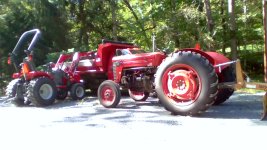
Hey retired007 I have 2018 M-F 1526 & bought it new :cool: ! I noticed You stated that You where looking at compacts & That seems to be Iseki main line tractors the list is quite long on who they have made engines for & all these brands are compacts tractors where Iseki made engines for or rebadge them thru a partnership AGCO,Bolens,Challenger,Iseki,& M-F & Massey-Ferguson just launched a new line of tractors 1800 series in a partnership with Iseki to build a full size compact & the M-F 1526 is considered a mid size compact now! So now you have 3 choices in compact tractors:cool:! & all have Iseki power plants! Just check out the history of Iseki & it goes all the way back to 1920 & they started off building implements ! Personally from all the research I did on Iseki I could not find any serious complaints or negative comments , Before my purchase & as a owner I can't complain after all it's a new tractor & if it holds up as good as my 1959 M-F 50 & I'm willing to bet it will. & just 1 other thing about the M-F 1526 the build quality was superb & paid cash for it without any reservations or regrets:love:It.IMG_20201003_134009.jpg
 
   / Iseki engines #40  
I have a 1994 MF1250 built by Iseki and have had very few issues in the 27 years I've had it. Reliable little tractor.
 

Tractor & Equipment Auctions

500 BBL FRAC TANK (A58214)
500 BBL FRAC TANK...
2016 Dodge Charger Sedan (A59231)
2016 Dodge Charger...
2018 INTERNATIONAL 4300 26FT NON CDL BOX TRUCK (A59905)
2018 INTERNATIONAL...
2017 Chevrolet Equinox SUV (A59231)
2017 Chevrolet...
2024 MECO M-Y 4-Passenger Electric Car (A59231)
2024 MECO M-Y...
500 BBL WHEELED FRAC TANK (A55745)
500 BBL WHEELED...
 
Top