New to me 240D

/ New to me 240D
  • Thread Starter
#41  
I retired from Shell Oil and I have removed many broke fastnerns in my 34 years.
Removed from setscrews to large bolts.
In my young years a journeyman taught me this trick.
Drill your screw/bolt.
Have a bottle of water with the top having a hole drilled in it, as to squirt a stream of water.
Heat the screw And surrounding metal nice and HOT. Not warm, but HOT!
Let it heat soak for a bit(20 seconds)
Now squirt a stream of water into the hole that you drilled into the screw. Use about the whole bottle of water.
Then quickly Tap in the screw extractor and try uncrewing the broken screw.
Sometimes it may take two attempts.
Now. Process reasoning is...
Heating the screw and surrounding area allows the metal to expand. And, with the base metal area having more mass and holding the heat longer, the Quinching of the screw with water allows the screw to cool and shrink just a bit allowing its removale.
Note- with the size of screw/bolt that your dealing with, there's a lesser chance of breaking the screw extactor. Just don't go "Gorilla" on it.
At Shell, they called me....
Dr. Ruth the "screw doctor"

I also was successful with the above mentioned weld method.

Now, on you fuel issue....
I fought a similar issue.
Cheched & cleaned everything including the filters. I finally pulled the fuel filter/petcock assembly appart. I replaced a small O-ring in the petcock valve, reassembled, and my ym226D ran like a champ!
I was sucking in air through the small worn O-ring.
Just maybe your issue.....
Good luck!

Thank you for this! I'm starting to realize that I'll likely need to remove the loader in order to get this bolt out :(. I have soaked the bolt/hole with Deep Creep for 24 hours, still not even budging. I tried to get heat on it, however the 2 mounting plates are not allowing much of the heat to reach the bolt. So I think the only way I'm going to get clear access to the hole and bolt, is going to be removing the FEL and mounts.

I'm trying to determine the best way to go about that, given the weight and awkwardness of the FEL. Currently the tractor is in my garage and not running, so I'm in a somewhat tough spot. I plan to wait on the new banjo bolt to arrive, see if I can get the tractor running again, then find somewhere I can drop the FEL. I was thinking some kind of hoist in a tree to keep the tractor side up in the air. Anyone have expierence with this that can offer suggestions?

And great tip on the petcock o-ring. I'll pull that apart and replace it. I did notice that when I was turning it the other day, it looked like air bubbles were being created inside the bowl, so that very well may be my issue.

Thanks again folks for all the help.

-Zach
 
Last edited:
/ New to me 240D #42  
Based on my experience, I would say if you can see air bubbles, I 100% guarantee that you will have injection and engine issues. When I finally found the air leak in my fuel line, the bubbles were perhaps 1/64" in diameter, basically a little bit of foam. One thing to think about is that if the air vent in the fuel cap is plugged, you might be vaporizing the fuel due to vacuum, rather than having an air leak. Try unscrewing the cap and see if the bubbles go away, if they do, you have an issue with the breather portion of the fuel tank cap.

Good luck with dropping the FEL. I would want to do it in a way that I would be able to drive in/out, or exploit the hydraulics to help me position it. I have learned not to brute force heavy objects...

All the best,

Peter
 
/ New to me 240D #43  
Thank you for this! I'm starting to realize that I'll likely need to remove the loader in order to get this bolt out :(. I have soaked the bolt/hole with Deep Creep for 24 hours, still not even budging. I tried to get heat on it, however the 2 mounting plates are not allowing much of the heat to reach the bolt. So I think the only way I'm going to get clear access to the hole and bolt, is going to be removing the FEL and mounts.

I'm trying to determine the best way to go about that, given the weight and awkwardness of the FEL. Currently the tractor is in my garage and not running, so I'm in a somewhat tough spot. I plan to wait on the new banjo bolt to arrive, see if I can get the tractor running again, then find somewhere I can drop the FEL. I was thinking some kind of hoist in a tree to keep the tractor side up in the air. Anyone have expierence with this that can offer suggestions?

And great tip on the petcock o-ring. I'll pull that apart and replace it. I did notice that when I was turning it the other day, it looked like air bubbles were being created inside the bowl, so that very well may be my issue.

Thanks again folks for all the help.

-Zach
I think you have always wanted pull the fel:) A tree will work, just be awful careful, don't work under it, sometimes the best looking limb is weaker than you think. If you have three long pipes it is better to make a tp, but, just be careful, a loader falling is not the end of the word, unless it hurts someone.

I won't debate air in the lines being a possible issue, but, when I put my sediment bowl back on empty and put fuel to it I see bubbles until it clears.

If you keep breaking bolts, soon you will have a new tractor;)

Best,

ed
 
/ New to me 240D #44  
Is that an OEM Yanmar loader? The later ones had a 'leg' you could install in the crossbar between the arms. Install the leg, lower the loader on to it, and position it where it will be easy to drive back into the abandoned loader. If your loader has quick-connect hydraulic links between the tractor and the loader, then it likely has this feature. Look for the 'leg' stored in the round crossmember between the arms.
 
/ New to me 240D #45  
As for removing the loader, find a level out of the way location.
There should be a stand mount somewhere for it. Somehow the stand never seems to remain with the loader. My Koyker loader has a piece of pipe welded in the center of the cross member on the forward arms on the loader. I made a support stand for mine. Not a biggie. A piece of pipe to fit inside the short piece on pipe on the loader. Drilled a hole through the pipe (keeping the hole aligned to match the holes in the mount on the tractor was probably the most difficult of the entire support build. I used a trailer jack plate on the other end of the pipe. I keep a piece of wood that has a pin (I made this also) to keep the wood with the plate to increase the footprint. Then I did a second pin in hindsight to keep it from spinning around. The pins were bolts, washers and nuts with a hole drilled through the thread end of the bolt to have a hair pin clip on it.
Use the hydraulics to lift the loader out of the support brackets on the tractor. Then after it is free from the mounts remove hydraulic lines. Hopefully it was installed with plans for removal and quick connects were installed.

Caution hydraulic fluid needs to be in a loop to the tank or you will quickly dumping fluid. Your dump rate will be your flow rate of your hydraulics. (If flow is 5 gallons/minute you will dump roughly 5 gallons every minute.) You could quickly run that system out of fluid.
Then back out of the loader.
When you remove the brackets from the tractor mark every thing possible for realignment/reassembly. The closer you get it back in position, the less trouble remounting the loader.
 
/ New to me 240D
  • Thread Starter
#46  
I think you have always wanted pull the fel:) A tree will work, just be awful careful, don't work under it, sometimes the best looking limb is weaker than you think. If you have three long pipes it is better to make a tp, but, just be careful, a loader falling is not the end of the word, unless it hurts someone.

I won't debate air in the lines being a possible issue, but, when I put my sediment bowl back on empty and put fuel to it I see bubbles until it clears.

If you keep breaking bolts, soon you will have a new tractor;)

Best,

ed
Haha, yeah pretty much what my better half told me.. She was stating how we are going to have a new tractor by the time I'm done and this thing is running :D
 
/ New to me 240D
  • Thread Starter
#47  
Is that an OEM Yanmar loader? The later ones had a 'leg' you could install in the crossbar between the arms. Install the leg, lower the loader on to it, and position it where it will be easy to drive back into the abandoned loader. If your loader has quick-connect hydraulic links between the tractor and the loader, then it likely has this feature. Look for the 'leg' stored in the round crossmember between the arms.

It is a OEM loader, however it's not the one with a leg on it. And unfortunately also do not have quick disconnect hydraulic links.. I wish though!
 
/ New to me 240D
  • Thread Starter
#48  
As for removing the loader, find a level out of the way location.
There should be a stand mount somewhere for it. Somehow the stand never seems to remain with the loader. My Koyker loader has a piece of pipe welded in the center of the cross member on the forward arms on the loader. I made a support stand for mine. Not a biggie. A piece of pipe to fit inside the short piece on pipe on the loader. Drilled a hole through the pipe (keeping the hole aligned to match the holes in the mount on the tractor was probably the most difficult of the entire support build. I used a trailer jack plate on the other end of the pipe. I keep a piece of wood that has a pin (I made this also) to keep the wood with the plate to increase the footprint. Then I did a second pin in hindsight to keep it from spinning around. The pins were bolts, washers and nuts with a hole drilled through the thread end of the bolt to have a hair pin clip on it.
Use the hydraulics to lift the loader out of the support brackets on the tractor. Then after it is free from the mounts remove hydraulic lines. Hopefully it was installed with plans for removal and quick connects were installed.

Caution hydraulic fluid needs to be in a loop to the tank or you will quickly dumping fluid. Your dump rate will be your flow rate of your hydraulics. (If flow is 5 gallons/minute you will dump roughly 5 gallons every minute.) You could quickly run that system out of fluid.
Then back out of the loader.
When you remove the brackets from the tractor mark every thing possible for realignment/reassembly. The closer you get it back in position, the less trouble remounting the loader.

Thanks - I was wondering about the best way to keep the FEL in alignment. I'll see if I can find a good way to create a pipe stand of sorts.

Appreciate the tip on the hydraulic lines, I've not dealt with them before, but figured because they were not quick connects, fluid would just drain out. If the pump is not running though, wouldn't that be minimal pressure?

Thanks,
Zach
 
/ New to me 240D #49  
I don't know about your tractor, but many have the return hydraulic line submerged at the tank, so it will leak from there.

All the best,

Peter
 
/ New to me 240D #50  
Thanks - I was wondering about the best way to keep the FEL in alignment. I'll see if I can find a good way to create a pipe stand of sorts.

Appreciate the tip on the hydraulic lines, I've not dealt with them before, but figured because they were not quick connects, fluid would just drain out. If the pump is not running though, wouldn't that be minimal pressure?

Thanks,
Zach

Not know how your loaders hydraulics are plumbed, it is not possible to tell exactly what effect your lines will will have on your reservoir of hydraulic fluid.

But some possibles are that your pump could pump the system empty with an open line.
Or you could have a siphon effect from the reservoir emptying the system.
The danger with emptying the system is damage to the hydraulic pump as air ends up introduced to the fluid supply.
I suggest completing the loop on the hydraulic fluid. Pictures might help with recommendations, but fittings to connect the 2 lines would be my suggestions, then use zip tied to hold the out of the way of being damaged.
 
/ New to me 240D
  • Thread Starter
#51  
To update - I ended up partially removing the FEL the other night in order to get better access to the snapped off bolt. I used some 2x4's and jack stands to stabalize things, while not fully removing it from the tractor. It looks a bit dodgy, but it's pretty stable.

Sadly to get directly on the bolt, I'd have to remove the frame which is the front bumper and attaches to the engine block. I tried loosening those bolts and can feel the weight of the engine on them, so I reversed course and tightened them back up. With that being a direction I want to avoid, I cut a 1/2in piece of copper pipe to fit inside the frame hole and I plan to weld to the top of the bolt and utilize the copper pipe to hopefully stop any of the weld from attaching to the frame itself. Time will tell if that's a good idea or not. Crossing fingers it works as my other options are not looking good.

Thanks for all the guidance along the way!

-Zach
 
/ New to me 240D #52  
To update - I ended up partially removing the FEL the other night in order to get better access to the snapped off bolt. I used some 2x4's and jack stands to stabalize things, while not fully removing it from the tractor. It looks a bit dodgy, but it's pretty stable.

Sadly to get directly on the bolt, I'd have to remove the frame which is the front bumper and attaches to the engine block. I tried loosening those bolts and can feel the weight of the engine on them, so I reversed course and tightened them back up. With that being a direction I want to avoid, I cut a 1/2in piece of copper pipe to fit inside the frame hole and I plan to weld to the top of the bolt and utilize the copper pipe to hopefully stop any of the weld from attaching to the frame itself. Time will tell if that's a good idea or not. Crossing fingers it works as my other options are not looking good.

Thanks for all the guidance along the way!

-Zach
Sorry to hear that the saga continues. I have done similar weld jobs, and had really nice results. I would ensure that your pipe is nice and tight against the broken bolt, so you don't end up jamming up the threads with weld spatter.

There is another school of thought that puts a steel pipe down the bolt hole and welds to the inside of that. Worst case, you now have a nice concentric drill guide for drilling EZ outs...

Personally, I think that it is the intense heat from welding that does most of the work.

All the best,

Peter
 
/ New to me 240D #53  
Sorry to hear that the saga continues. I have done similar weld jobs, and had really nice results. I would ensure that your pipe is nice and tight against the broken bolt, so you don't end up jamming up the threads with weld spatter.

There is another school of thought that puts a steel pipe down the bolt hole and welds to the inside of that. Worst case, you now have a nice concentric drill guide for drilling EZ outs...

Personally, I think that it is the intense heat from welding that does most of the work.

All the best,

Peter
Yup and yup, I have never tried the copper pipe, but it sounds like it would need a lot of room? My suggestion was just the iron pipe and hit the middle. If needed you can chase it with a tap after, although I have never needed to. Please let us know how the copper does?

If all else fails keep stepping up in drill size till the damn bolt is gone/down to the threads and you can pick it all out. Then tap/helicoil as needed. Bless your heart, you have been patient and diligent, I would have blown through it with a torch and fixed it/burnt it down a week ago, either way I would be done:)

Nod to above, I also believe the heat of the stick is the biggest help.

Best,

ed
 
/ New to me 240D #54  
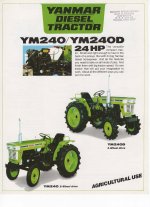
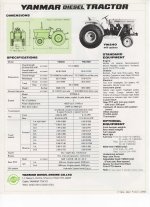
Slightly off topic but I recently bought some original literature for my YM226 and also got a brochure for the YM240 so I figured id share since its relative to your new to you 240.
 

Attachments

  • Yanmar 240 Basic Brochure 1.jpeg
    Yanmar 240 Basic Brochure 1.jpeg
    2.3 MB · Views: 137
  • Yanmar 240 Basic Brochure 2.jpeg
    Yanmar 240 Basic Brochure 2.jpeg
    2.3 MB · Views: 156
/ New to me 240D #56  
Well I'm still too longwinded. But here's another YM240 brochure.

 
/ New to me 240D
  • Thread Starter
#57  
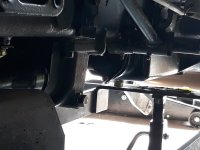
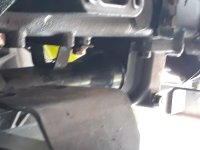
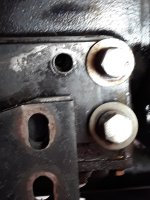
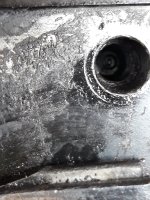
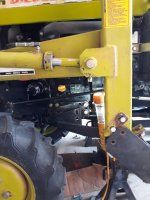
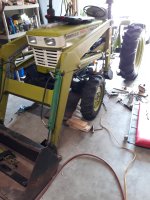
Ok, phew... The multi-week saga has (atleast for this part) finally come to an end. This morning I was able to break out the rest of the bolt from it's resting place :). Re-tapped the threads and now will start the process of cleaning the rest of the bolt holes and putting things back together. My partner is going to be happy to get this thing out of the garage lol. As you will see from the pics, I essentially had the FEL removed, just didn't separate at the hydraulic line. For anyone else, the key for me was getting the cold steel 1/4 chisel. With that, I was able to slowly break out the bolt.

Thank you again to everyone for the help/guidance/support!
 

Attachments

  • 20210807_095408.jpg
    20210807_095408.jpg
    1.8 MB · Views: 148
  • 20210807_095348.jpg
    20210807_095348.jpg
    1.5 MB · Views: 144
  • 20210807_095345.jpg
    20210807_095345.jpg
    1.4 MB · Views: 130
  • 20210807_095327.jpg
    20210807_095327.jpg
    1.6 MB · Views: 151
  • 20210807_095300.jpg
    20210807_095300.jpg
    1.9 MB · Views: 141
  • 20210807_095207.jpg
    20210807_095207.jpg
    2.1 MB · Views: 138
  • 20210807_095159.jpg
    20210807_095159.jpg
    2 MB · Views: 148
  • 20210807_100832.jpg
    20210807_100832.jpg
    1.5 MB · Views: 175
  • 20210807_095841.jpg
    20210807_095841.jpg
    2.1 MB · Views: 884
/ New to me 240D
  • Thread Starter
#58  
On a separate note - When I'm at 2k RPM's (which sounds fairly high rev'd to me) and use the front bucket, the engine seems to struggle. Am I just at too low of an RPM? It just seems like I'm constantly having to adjust the throttle in order to keep the engine happy. I've changed the fuel filter and bled the air out. Not sure what else to check except for the hydraulic pump itself?
 
/ New to me 240D #59  
On a separate note - When I'm at 2k RPM's (which sounds fairly high rev'd to me) and use the front bucket, the engine seems to struggle. Am I just at too low of an RPM? It just seems like I'm constantly having to adjust the throttle in order to keep the engine happy. I've changed the fuel filter and bled the air out. Not sure what else to check except for the hydraulic pump itself?

Take the air filter out and clean it. Engine RPMs dropping off like that is typical of a dirty air filter. Also, with a shop-vac clean out the intake parts and tubes to the engine.

Is the exhaust clean without soot?

And our machine use 10W30 for summer use. It the engine has 15W40 like old Iron American tractors, it will run sluggish like it's under power with that thick oil. Japan tractors do not like thick oil.
 
/ New to me 240D
  • Thread Starter
#60  
Take the air filter out and clean it. Engine RPMs dropping off like that is typical of a dirty air filter. Also, with a shop-vac clean out the intake parts and tubes to the engine.

Is the exhaust clean without soot?

And our machine use 10W30 for summer use. It the engine has 15W40 like old Iron American tractors, it will run sluggish like it's under power with that thick oil. Japan tractors do not like thick oil.

Thanks! Just replaced the air filter, but will check the intake tube, etc. Exhaust is clean, no problem there and starts with no issues.

I did put 15W40 in it :( when I changed the oil. Man.. Hate to think that could cause the engine to bog when using the FEL. Sadly it's even just under it's own weight, it's not like I'm lifting anything or doing any work.

Appreciate the suggestion, I'll check the intake, etc. maybe it's clogged and just didn't realize it.

What RPM would you expect I could life the FEL without the engine bogging down?
 

Marketplace Items

FORD 4600 TRACTOR (A60430)
FORD 4600 TRACTOR...
2010 CATERPILLAR 303.5C CR EXCAVATOR (A60429)
2010 CATERPILLAR...
2013 TEXAS PRIDE LAY FLAT HOSE TUGGER TRAILER (A58214)
2013 TEXAS PRIDE...
UNUSED IRANCH IRLMB HYD MINI CONCRETE MIXING BKT (A60432)
UNUSED IRANCH...
2021 BOBCAT T870 SKID STEER (A60429)
2021 BOBCAT T870...
Amada M-3060 Mechanical Metal Shear (Japan) (A59213)
Amada M-3060...
 
Top