Tips on using a FEL (how not to turn it over)

   / Tips on using a FEL (how not to turn it over) #21  
Spiveyman... put as MUCH weight on your carryall as you can... really, really... put 1000 lbs on it if you can find it and affix it firmly... you can always take it off later, but need to get a feel for how the vehicle handles with full weight on it... you want the vehicle to simply glide over the ground when it is loaded and you are moving stuff.. if it porpoises up and down as you go across the country, weight isn't sufficiently balanced. If properly balanced, tires squish when they hit bumps and total vehicle kinda stays stable without bouncing or porpoising.

As a starter, I DO recommend you put a round bale on your rear... it'll be over 1000 lbs and certainly sufficiently stable while you are learning how things handle... you can go later to the carryall for a shorter total vehicle, etc.
 
   / Tips on using a FEL (how not to turn it over) #22  
One thing I didn't see is try not to use the bucket as a step ladder. This is very tempting as it is and easy way to elevate yourself or others, but can be dangerous if the hydraulics should fail.

- General rule of thumb, when carrying a load, keep it low and slow.
- Also watch the terrain you are driving over. An unseen pot hole with a loaded bucket can multiply the chance of tilting.
- If you get stuck, you can use the bucket to "crawl" or push yourself out of a stuck situation by sticking the bucket into the ground and curling or uncurling it.
 
   / Tips on using a FEL (how not to turn it over)
  • Thread Starter
#23  
texasjohn said:
Spiveyman... put as MUCH weight on your carryall as you can... really, really... put 1000 lbs on it if you can find it and affix it firmly... you can always take it off later, but need to get a feel for how the vehicle handles with full weight on it... you want the vehicle to simply glide over the ground when it is loaded and you are moving stuff.. if it porpoises up and down as you go across the country, weight isn't sufficiently balanced. If properly balanced, tires squish when they hit bumps and total vehicle kinda stays stable without bouncing or porpoising.

As a starter, I DO recommend you put a round bale on your rear... it'll be over 1000 lbs and certainly sufficiently stable while you are learning how things handle... you can go later to the carryall for a shorter total vehicle, etc.

Thanks for the notes. Right now it is not well balanced. The tractor had a weight bracket on there, but they sold it off the tractor before I bought it. Since I planned to get a FEL I didn't worry about it. I do know what you mean though about it bouncing around a bit. I'll mess with that once I get the FEL installed and get it all balanced out. I'll start out with the round bale.

I also had a chance to check out the other threads. Hadn't really thought that much about the dangers of rear roll over. #1 I can't imaging hooking up to something like a stump in the ground. #2 I can't imagine hooking up to anything higher than the draw bar #3 Glad I saw those videos because I'll be thinking about that now. Another valuable lesson learned on TBN!!!

Also, I hear you about the "cherry picker" use of a FEL. Not such a bright idea.

Thanks
 
   / Tips on using a FEL (how not to turn it over) #24  
Most of us have hooks welded to the bucket to pick up things with chains. Usually a hook at each end and one in the center. Be careful not to pick up anything heavy using just one of the outboard bucket hooks. If you do you might find the rear wheel on the opposite side coming off the ground. The higher the FEL goes the stronger the tendency to roll toward the object being lifted. The end hooks should be used together, not one at a time.

This same thing can happen accidently if you're operating near a slab of concrete, tree or large rock. If one end of the bucket edge gets hung up under something that just won't move, the tractor will try to roll when you go to lift the bucket. There's usually plenty of time to catch this before it becomes a disaster, but the rear wheel coming off the ground sure gets your attention. If the item that hooks the bucket is on the downhill side of the tractor, things could get hairy quickly.
Bob
 
   / Tips on using a FEL (how not to turn it over) #25  
"I could pick up a round bale with a spear, that's certainly heavy, but doesn't seem very secure as it could slide off. Hmmm.... this carry all has a 1,000 lb capacity."

Round bale is high CG weight. Your carryall looks good, and some cinder blocks as you mentioned would allow concentration of the weight closer to the ground. Better yet - hardened bags of concrete.
larry
 
   / Tips on using a FEL (how not to turn it over) #26  
Spiveyman said:
Howdy all.

Well, I am getting a FEL for my Ford 6610 installed next week and was curious if any of you folk with experience had advice for us newbies about operating a tractor with a FEL.

Thanks in advance.

When the bucket is not touching the ground and the tractor is in motion or about to be placed into motion you should ALWAYS have your hand on the joystick AND have practiced enough with it so that your muscle memory knows which way to move the stick to drop the load to the ground with NO CONSCIOUS THOUGHT.

Dropping the bucket to the ground at the first sign of trouble will often serve to prevent a roll over. Accidentally moving the bucket the wrong way when tryi8ng to recover will help insure that you topple over.

Do not place your body or any significant part thereof under the path that a falling bucket would take, especially if it is loaded.

Keep the loaded bucket as low to the ground as practical when moving the tractor and at all times except when necessary to raise it to dump it or perform other material handling tasks (with the tractor stationery if at all possible.)

You will find that rotational inertia is greatly increased with a loaded bucket and if yo attempt to start or stop a turning movement with poor traction under your tires that yo will spin (if you are lucky) and maybe turn over if you are the right combination of unlucky and high bucket.

NEVER EVER try to turn faster than molasses in January if you have the bucket way high because even empty the centrifugal force and the lever arm of the raised bucket can turn you on your side in a heartbeat.

Pat
 
   / Tips on using a FEL (how not to turn it over) #27  
Here is a start.

Powered industrial trucks. - 1910.178 App A

It is a link to OSHA standards on forklifts or Powered Industrial Trucks (PITs)

Basicly if you are on level ground & you try to lift more weight in the bucket than the tractor's rear weight can ballance then it tips over on its front wheels onto the bucket or its nose.

If you are sideways on a slope as you lift the bucket higher the tractor's center of gravity shifts towards the down slope wheels, if it passes them you tip over.

If you hit a hole or bump then the tractor tips some & if the bucket load is high then the load momentum like the head on a hammer may keep moving till you tip over.

On a side slope the bucket load could shift in the bucket causing a shift in center of gravity.

The best advice is "Drive it slow & keep it low" always lower the load before moving if possible. If raising the loader high to say dump into a truck only do it on firm level ground.

Wear your seat belt & if you do tip ride it down & keep your hands & arms inside the ROPS.

Stay safe
 
   / Tips on using a FEL (how not to turn it over)
  • Thread Starter
#28  
Bob_Young said:
Most of us have hooks welded to the bucket to pick up things with chains...

I'm getting a BH loader, I don't think it has those hooks, but I know what you are talking about. If I ever get them I'll remember to use the both. I have a nice boom pole, but I've heard it's better to lift with the FEL.

SPYDERLK said:
Round bale is high CG weight. Your carryall looks good, and some cinder blocks as you mentioned would allow concentration of the weight closer to the ground. Better yet - hardened bags of concrete.

Good points, as long as the load is secured to the carry all, I'd have much better control over it and can get itas low as I need.


patrick_g said:
When the bucket is not touching the ground and the tractor is in motion or about to be placed into motion you should ALWAYS have your hand on the joystick AND have practiced enough with it so that your muscle memory knows which way to move the stick to drop the load to the ground with NO CONSCIOUS THOUGHT...

Yes... I'll have to practice to make sure that operation of the FEL is second nature and can be done on instinct. Great suggestion. I wouldn't have really thought to keep my hand on the thing for that purpose while moving. I have been thinking I'd better keep my hands on the wheel so I could control the tractor, but this makes sense.

DrainPondDesign said:
Basicly if you are on level ground & you try to lift more weight in the bucket than the tractor's rear weight... ...The best advice is "Drive it slow & keep it low" always lower the load before moving if possible. If raising the loader high to say dump into a truck only do it on firm level ground.

I started out in this thread just thinking about a side rollover... There truly are so many more dimensions to moving with a full FEL.

I appreciate all the time and input. Now I'm more cautious, but also more anxious to start using that FEL. Even though I see more room for error, I feel a little more secure at least having thought through them ahead of time.
 
   / Tips on using a FEL (how not to turn it over) #29  
oops...everybody has forgotten to tell you about the wonderful benefit of having a toothbar on your FEL bucket... check out the many threads that talk about this.

The net is that you WILL want a toothbar IF you are going to be moving anything other than fluffy stuff. If digging into hardened dirt or into a pile of gravel, etc...and for many, many other uses, a toothbar is a very, very beneficial and cost effective additon to the bucket..get it at the same time you get your bucket... numerous manufacturers... all discussed in numerous threads.
 
   / Tips on using a FEL (how not to turn it over) #30  
Spiveyman, I think a great inexpensive addition for your tractor would be a home made rear weight. You have a good size tractor and it will handle a loader that carries a lot of weight. Even with your size tractor the rear is going to get light with a full load. An effective weight can be made with a drum or garbage can filled with concrete. You get a draw bar, the type that connects between the lift arms, to insert through the can before filling. Some flat stock or even eye bolts can be set in the concrete for a connection point for the top link. A container large enough for 12 bags of ready mix gives you almost 1000 pounds and more would be even better.

A search here on the forum will show some clever ideas people have incorporated on there weights to carry chains and tools.

Does your new loader have the skid steer type of quick attach system? For you I would think being able to switch to a set of forks or a bale spear would be important on the farm.

MarkV
 
   / Tips on using a FEL (how not to turn it over)
  • Thread Starter
#31  
texasjohn said:
oops...everybody has forgotten to tell you about the wonderful benefit of having a toothbar on your FEL bucket... check out the many threads that talk about this.

The net is that you WILL want a toothbar IF you are going to be moving anything other than fluffy stuff. If digging into hardened dirt or into a pile of gravel, etc...and for many, many other uses, a toothbar is a very, very beneficial and cost effective additon to the bucket..get it at the same time you get your bucket... numerous manufacturers... all discussed in numerous threads.


Yep!!! I'm figuring that out. I've been checking out those other threads and have already seen the benefits of the toothbar. Since I'm getting a BH loader, I'll get a BH toothbar. I made a note to call the dealer in the morning and get one on order! Thanks.

MarkV said:
...inexpensive addition for your tractor would be a home made rear weight. You have a good size tractor and it will handle a loader that carries a lot of weight. Even with your size tractor the rear is going to get light with a full load. An effective weight can be made with a drum or garbage can filled with concrete. You get a draw bar, the type that connects between the lift arms, to insert through the can before filling. Some flat stock or even eye bolts can be set in the concrete for a connection point for the top link. A container large enough for 12 bags of ready mix gives you almost 1000 pounds and more would be even better.

A search here on the forum will show some clever ideas people have incorporated on there weights to carry chains and tools.

Does your new loader have the skid steer type of quick attach system? For you I would think being able to switch to a set of forks or a bale spear would be important on the farm.

Yep on the quick disconnect, I do have a bale spear with the order so that I can stack and I can move two bales at a time. I spend a lot of time just transporting bales on the back of my tractor from the back of the farm to the cattle. I don't have one of those fancy bale wagons.

As for the rear weight. I was starting to get an idea of how you could do that from other threads, so I really appreciate the details here. That sounds like a great idea, however I think I'll have to run with the thought of making the weight more functional than just to be heavy, like a moving (but secure) tool bench. Problem is I can't weld, so I'll have to get clever some other way... Actually, I think I'll start a thread and ask for ways to make rear ballast.
 
   / Tips on using a FEL (how not to turn it over) #32  
Spiveyman:

Everyone has given you good advice. Patrick G's bears repeating: practice (physically and mentally) to push the loader control handle all the way forward (to float) the second you feel the tractor starting to tip. Since it is the weight in the loader that causes most tips, putting the control valve into float takes most (but not all) of that weight off the tractor. Unless the tractor has already tipped quite a bit that will stop the tipping as Patrick G said.

I add one more rule: if the tractor is moving, steer in the direction of the lean. For example, if you are on the side of a hill and the tractor starts to tip downhill, simultaneously push the loader control stick full forward and steer downhill. Just like a car going around a curve, the turn creates centrifugal force that opposes the lean.

I have a Kubota B2400 with a Kubota FEL that will tip very easily, even with the bucket quite low. Despite trying to observe all the precautions the previous posters have described, we regularly feel one of the rear wheels lifting when using the loader. So I make all the users practice the dual response of dropping the bucket and turning into the lean. It has prevented a tipover on several occasions.
 
   / Tips on using a FEL (how not to turn it over)
  • Thread Starter
#33  
Farmerford said:
I add one more rule: if the tractor is moving, steer in the direction of the lean. For example, if you are on the side of a hill and the tractor starts to tip downhill, simultaneously push the loader control stick full forward and steer downhill. Just like a car going around a curve, the turn creates centrifugal force that opposes the lean.

Thanks. My wife's going to think I'm nuts when she sees me driving around the field dropping, or floating, the bucket over and over, turning here and there! Of course she already thinks I'm nuts for spending so much time on TBN. :)
 
   / Tips on using a FEL (how not to turn it over) #34  
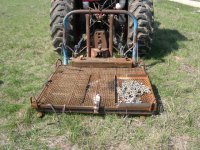
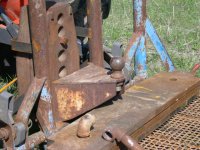
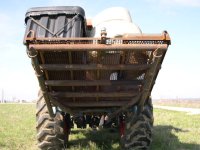
I used my 3PH hay fork, put a carryall on it, welded a gooseneck ball to the hay fork, put a grate floor on the carryall (makes it easy to chain/tie stuff down), added weights, toolbox, other heavy stuff. This rear rig goes with me everywhere except when I'm actually hauling hay on it. The carryall has pipes that slip over the tines of the hay fork and chains hold it on the fork. So, this rig is both heavy and functional. Photos below
CARRYALL_1_1109.JPG

HAY_FORK_WEIGHTS_BALL_WEIGHTS_1_1092.JPG

CARRY_ALL_BOTTOM_1_1088.JPG
 
   / Tips on using a FEL (how not to turn it over)
  • Thread Starter
#35  
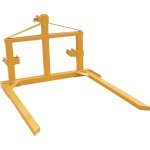
That is great! Does that thing make coffee?!?! :D That looks like the most usefull all around 3pt implement I've ever seen. There's not a chance I could make something like that, but I love seeing it. It does give me some ideas though of some things that I might be able to pull off starting with a bale carrier like this one from TSC.

Bale Lifter.jpg

For starters it has a 2,000 lb weight limit, where as the carry all is only 1,000. It also could cary the load a little lower to the ground if I rigged up something like you have. Certainly lower than a bale on a spear. That is exactly why I was hoping for some pictures because I never would have thought about that and it's going to be more usefull than a 55 gal drum full of concrete even with pipes in it. I'm not dogging on those other ideas, I just happen to really like this one. I guess the challenge is still getting a bunch of weight on it. I bet that thing would also help out with that rear rollover issue. It wouldn't support my whole tractor at 90°, but in a partial tilt condition I can see that thing being beefy enough to help discourage a roll over. I'm going to add that to my wish list... Do you mind if I post those pics with proper credit in my "Stuff you just have to have to start farming" thread? :) That's just way cool.
 
   / Tips on using a FEL (how not to turn it over) #36  
Use any idea that seems to be useful to you! Post anywhere. Glad you like it.. :D yep, I couldn't leave home without it... I hang trash buckets on the frame as well..oh so handy. Also, welded chain hooks on it.. You can see them if you know where to look... also handy.
 
   / Tips on using a FEL (how not to turn it over) #37  
Spiveyman said:
Howdy all. I saw a couple of threads out there in the last couple of days where people turned their tractors over, I presume while using their FEL's. Luckily it sounds like neither one was hurt, and their threads are more about how to deal with the tractor after the fact.

Well, I am getting a FEL for my Ford 6610 installed next week and was curious if any of you folk with experience had advice for us newbies about operating a tractor with a FEL. I've been thinking of several things I want to do with it and the thought of turning it over has come to mind. It would be great to learn from other's mistakes to keep from having to do that one load of laundry - the one everyone seems to refer to right after turning over their tractors! :eek:

Thanks in advance.

Don't know if your 6610 is MFWD or 2-wheel drive. If it's MFWD and you're in MFWD and you're using the FEL to scoop a bucket full of soil, sand, gravel, etc, be sure your front wheels are on a surface that will allow them to spin (gravel, sand, dirt) after you jam the bucket into the pile. You can damage the MFWD system otherwise. This can be a concern if the pile of stuff you're moving is sitting on a concrete slab.

The closest I've come to tipping my little 21-hp Kubota B7510HST/LA302 FEL came when I was moving a pile of dirt. I had just filled the bucket which was elevated about 5 feet. As I backed away from the pile, the right front wheel slipped into a wheel rut that I had previously made. The left rear was off the ground a few inches. Scary, but I was able to lower the bucket and back out of the rut before the tractor rolled over on its side.
 
   / Tips on using a FEL (how not to turn it over) #38  
TrippleT said:
While this may sound odd, your loader if new, will have a manual that comes with it. Read, read, read it. It should show the different ways to attack a mound of dirt and many other things, such as the proper angles to dig, doze etc. ...
PS If your loader isn't new you can go on the net and download manuals for a loader. Most will have all the information you need.

Exactly - some tractors tell you NOT to load tires... all tell you what you should do for ballast based on the FEL...
 
   / Tips on using a FEL (how not to turn it over) #39  
About weights for a carryall or rear weight for a tractor. An old barrel filled to the appropriate level (not to overload your particular tractor) with larger rocks (but still within your capability to handle) and then grouted (filled) with thinner than standard mortar mix (sand and Portland cement, no gravel) will make a good weight that will outlast the drum you cast it in. A little rebar or wire mesh will make it last forever.

If you don't have or don't want to involve your carry all or it is rated for way less than the 3PH then you can put 3PH pins bolted to some scrap steel embedded in the drum before you add the grout. Be sure the pins are well above the center of gravity of the weight and you won't need to use the top lift of the 3PH but if you do add the connection for the top it lets you raise it higher for better clearance in those "special circumstances."

The reason for the larger rocks and no gravel is to allow the grout to flow into all the spaces between the rocks, broken cinder blocks, and odd chunks of scrap metal you use for weight.

Pat
 
   / Tips on using a FEL (how not to turn it over) #40  
patrick_g said:
About weights for a carryall or rear weight for a tractor. An old barrel filled to the appropriate level (not to overload your particular tractor) with larger rocks (but still within your capability to handle) and then grouted (filled) with thinner than standard mortar mix (sand and Portland cement, no gravel) will make a good weight that will outlast the drum you cast it in. A little rebar or wire mesh will make it last forever.

Pat

Mornin Pat,
Absolutely, works like a charm ! ;)

http://www.tractorbynet.com/photos/data/531/18786DCP_0247-med.JPG
 

Marketplace Items

2024 CATERPILLAR 305 CR EXCAVATOR (A52709)
2024 CATERPILLAR...
FORD 8530 TRACTOR (A58375)
FORD 8530 TRACTOR...
TANK MANIFOLD (A55745)
2016 FORD F-250 SUPER DUTY (A58214)
2016 FORD F-250...
2015 DODGE RAM 3500 4X4 CREW CAB PICKUP TRUCK (A59904)
2015 DODGE RAM...
2350 (A60432)
2350 (A60432)
 
Top