
You are using an out of date browser. It may not display this or other websites correctly.
You should upgrade or use an alternative browser.
You should upgrade or use an alternative browser.
trailer weights 9990 or 10000
- Thread starter 257NH
- Start date
- Views: 22868
More options
Who Replied?
/ trailer weights 9990 or 10000
#21
Builder
Super Member
- Joined
- Feb 22, 2006
- Messages
- 6,155
- Tractor
- Kubota, AGCO, New Holland LB
257NH said:So if my combined weight is always below 26000 there is no practical difference between 9990 and 10000?
Not in terms of a CDL.
MrJimi
Elite Member, Rest in Peace
Keywords are private not for hire

Builder
Super Member
- Joined
- Feb 22, 2006
- Messages
- 6,155
- Tractor
- Kubota, AGCO, New Holland LB
MrJimi said:Keywords are private not for hire
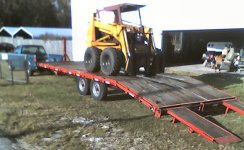
Doesn't mean a hill of beans in my state when it comes to being overweight. Just because you have "not for hire" painted on the side of your truck doesn't excuse you from a routine DOT inspection. If you're overweight, you're overweight. Your skid steer loaded is used to make money, not run in a Labor Day parade, right? That is considered use of or transportation of a vehicle that is for hire
An F-550 with a 15K trailer and a skid steer loader is making money in some way shape or form, not going to the beach with the wife & kids. Hey man, do what you want. I'm not gonna lose any sleep if you get nailed for being underweight or for hire and get the crap fined out of you. I'm just trying to help you tow your trailer legally and not need a CDL.

bjcsc
Platinum Member
- Joined
- Feb 20, 2007
- Messages
- 559
- Location
- Johns Island, SC
- Tractor
- JD 5225, JD 555B, JD 333E, JD 225DLC
257NH said:So if my combined weight is always below 26000 there is no practical difference between 9990 and 10000?
Builder said:Not in terms of a CDL.
This is somewhat misleading. The CDL requirement has nothing to do with the combined weight, even though that has been stated several times in this thread. It has to do with the GVWR. If your truck's GVWR is 16000lbs and your trailer's GVWR is 10001lbs or more you need one. It doesn't matter what's in the truck, or what's on the trailer. If the same truck was weighed on a scale at 9000lbs and the empty trailer was weighed on a scale at 1200lbs you would still get fined. The actual weight has nothing to do with it. It's the GVWR. This distinction is the source of much of the confusion about the laws...
Last edited:
Builder
Super Member
- Joined
- Feb 22, 2006
- Messages
- 6,155
- Tractor
- Kubota, AGCO, New Holland LB
bjcsc said:This is somewhat misleading. The CDL requirement has nothing to do with the combined weight, even though that has been stated several times in this thread. It has to do with the GVWR. If your truck's GVWR is 18.000lbs and your trailer's GVWR is 6001lbs or more you need one.
You most certainly do not. In your scenario, the combined weight would be only 24,001lbs....well below the 26,000 CDL combined weight restriction and the trailer in tow is under 10,001.
"It doesn't matter what's in the truck, or what's on the trailer. If the same truck was weighed on a scale at 9000lbs and the empty trailer was weighed on a scale at 1200lbs you would still get fined. The actual weight has nothing to do with it. It's the GVWR. This distinction is the source of much of the confusion about the laws...
Huh?
I believe that is also incorrect because if the trailer is under 10,001 lbs, then any vehicle up to 26,000 can tow that trailer since the trailer is under 10,001 with no CDL. Now if the towing vehicle goes over 26,000, then only a Class B CDL is required.
bjcsc
Platinum Member
- Joined
- Feb 20, 2007
- Messages
- 559
- Location
- Johns Island, SC
- Tractor
- JD 5225, JD 555B, JD 333E, JD 225DLC
Sorry, Math error. Should have read 16000 and 10001lbs. I edited it. What do you mean by Huh?
Forget about what the trailer weighs. If it's GVWR is 10001lbs and you pull it with a truck that has a GVWR of over 16000lbs you need a CDL as the combination exceeds 26000lbs. The second part of what you said is correct, provided the trailer's GVWR is under 10000 (hence the 9990 rating he found)...
Forget about what the trailer weighs. If it's GVWR is 10001lbs and you pull it with a truck that has a GVWR of over 16000lbs you need a CDL as the combination exceeds 26000lbs. The second part of what you said is correct, provided the trailer's GVWR is under 10000 (hence the 9990 rating he found)...
Builder
Super Member
- Joined
- Feb 22, 2006
- Messages
- 6,155
- Tractor
- Kubota, AGCO, New Holland LB
bjcsc said:Sorry, Math error. Should have read 16000 and 10001lbs. I edited it. What do you mean by Huh?Forget about what the trailer weighs. If it's GVWR is 10001lbs and you pull it with a truck that has a GVWR of over 16000lbs you need a CDL as the combination exceeds 26000lbs.
And I have always maintained that position, when have I stated otherwise?
I think where you are mistaken is trying to find a position where any trailer under at 9990 or 10,000 (as the original question was posted) would EVER require a class A CDL. That is not possible. You can tow a trailer under 10,001 with any vehicle up to 26,000 and not be required to have a CDL.
"The second part of what you said is correct, provided the trailer's GVWR is under 10000 (hence the 9990 rating he found)...
Actually, it's GVWR is under 10,001lbs. A 10,000lb trailer falls under that limit.
bjcsc
Platinum Member
- Joined
- Feb 20, 2007
- Messages
- 559
- Location
- Johns Island, SC
- Tractor
- JD 5225, JD 555B, JD 333E, JD 225DLC
Builder said:And I have always maintained that position, when have I stated otherwise?
I'm not saying you did. I have no doubts as to your clarity on the issue. My only point is that when people (in general) talk about trailer weight is gets confused with the GVWR. Most people get confused by the difference...some people think that as long as you don't fully load the trailer you're OK...

CumminsLuke
Silver Member
Builder said:I'm envious of your lack of "regulation", however, I'd like to say that what you're doing isn't safe. It's beyond the saftey limits of what your truck was designed for. I know you're aware of it and I also know that a lot of farm country LEOs don't enforce any truck laws and I'm not trying to "preach" at you.
Where I live, in a typical DOT routine truck stop this is what happens: There's level 1,2 and 3 inspections. A level 2 is typical. You are asked to produce all papers. If you get through that, you are asked to produce a med card and a log book, show that you have a fire extinguisher and 3 red triangles. When your registration is being checked, that's when they would discover that 30,000+ lbs is FAR in excess of any pickups capability and you would be put out of service immediately and given a written summons for being "out of registration parameters". While that's going on, your truck's trailer weights and trucks weights will be checked with scales. If any are overweight, you are immediately out of service.
That's just the tiop of the iceberg. You should consider yourself lucky to be able to be that far in excess of your truck's capacity and not get nailed to the wall, like you would in my community.
I would also say that the DOT laws are becoming much more of a set of "federal" regulations as each year passes. My guess is that if you got a copy of your DOT regs, even though they're not enforced in your community, you'd find you are not within the DOT parameters for a safe rig.
Everyone is a prouct of their enviroment. Our enviroment is one of regulations to the book. The laws enforced in my area are the federal DOT guidelines.
You and I have been debating things online for years. I am not sure you even realize who I am? You sure have done a complete 180 in a lot of areas, especially brand of truck.
Anyhow, not trying to bust your chops.
Tell me this though, when I pull up to the auto auction and there are 20 1-ton pick-ups pulling 48'-53' wedge car haulers and they are all plated for somewhere around 26k-36k, how is it that we all get by with that without being nailed? What about the hundreds if not thousands of hot shotters out there running at the same levels as me, they are legal as far as licensing issues are concerned and I know they have the proper insurance as do I. How do they get by with it?
CumminsLuke
Silver Member
Builder
Super Member
- Joined
- Feb 22, 2006
- Messages
- 6,155
- Tractor
- Kubota, AGCO, New Holland LB
CumminsLuke said:You and I have been debating things online for years. I am not sure you even realize who I am? You sure have done a complete 180 in a lot of areas, especially brand of truck.
Anyhow, not trying to bust your chops.
That's OK, go ahead & bust 'em. I ain't runnin.
Sometimes people switch brands. To stay with one brand for a lifetime is just stupid since that brand may not offer certain options or have declining quality. Where else have I done a 180 other than the kind of pickup I drive?
" Tell me this though, when I pull up to the auto auction and there are 20 1-ton pick-ups pulling 48'-53' wedge car haulers and they are all plated for somewhere around 26k-36k, how is it that we all get by with that without being nailed? What about the hundreds if not thousands of hot shotters out there running at the same levels as me, they are legal as far as licensing issues are concerned and I know they have the proper insurance as do I. How do they get by with it?"
They do in my state! I just spoke with my DOT MVCE cop friend yesterday and he is busting 3 & 4 wedge car haulers all over the place!
If people are allowed to register their trucks beyond the safe limits they're designed for, then what's to keep them from towing a 20 ton concrete mixer? How about a 5,000 gallon tanker???
Using your logic, in your mind, there seems to be no limit as to what you can tow, right?
So where does it end?
What does "MAX GCWR 24,000 LBS" listed for your truck mean to you?
Nothing?
You do realize that if you're involved in a collision especially one with personal injuries, lawyers are going to go through your truck/trailer with a fine tooth comb and see if you're out of spec on any of the limits, right? When they find one, you're gonna get sued for everything you own!
I'm not trying to scare you, just maybe make you realize you're at risk doing exceeding your manufacturers maximum safety ratings.
Flame away!
CumminsLuke
Silver Member
Builder said:Using your logic, in your mind, there seems to be no limit as to what you can tow, right?
So where does it end?
What does "MAX GCWR 24,000 LBS" listed for your truck mean to you?
Nothing?
Na, there are limits.
There is no "Max GCWR" stamped on a truck. Only GVW's and axle GVW's. There is no way a cop or a dot man can possibly have all the GCWR's for every make and model of truck, even the axle ratio effects that number, and they are not going to be able to look at a truck and know what axle ratio it has. Only way I know they can give you a ticket is if you are over the weight you are plated for, over on you axle ratings per axle, or you are over your tires rated capacity.
CumminsLuke
Silver Member


Builder
Super Member
- Joined
- Feb 22, 2006
- Messages
- 6,155
- Tractor
- Kubota, AGCO, New Holland LB
CumminsLuke said:Na, there are limits.
There is no "Max GCWR" stamped on a truck. Only GVW's and axle GVW's. There is no way a cop or a dot man can possibly have all the GCWR's for every make and model of truck, even the axle ratio effects that number, and they are not going to be able to look at a truck and know what axle ratio it has. Only way I know they can give you a ticket is if you are over the weight you are plated for, over on you axle ratings per axle, or you are over your tires rated capacity.
Incorrect. DMV can run your VIN and determine your max GCWR. Besides, any cop with as much knowledge as Barney Fife knows there's nop pickup with a GCWR over 24-26K anyway. MVCE cops go to a school to learn all the tricks you try to pull over on them and believe me, your area cops will wise-up to the laws sooner or later.
By making the statement
aren't you really still breaking the law and in denial? Aren't you saying "Even though Dodge has told me the max GCWR and I'm exceeding that safety limit, I won't get caught because the cops can't see it stamped on the door jamb"?"No way a cop or DOT man can possibly have all the GCWR's of every make and model of truck"
Look at it this way: Why do big rigs have GCWR's stamped on them?
Builder
Super Member
- Joined
- Feb 22, 2006
- Messages
- 6,155
- Tractor
- Kubota, AGCO, New Holland LB
CumminsLuke said:These are the kind of loads I haul..........
Those loads don't look much in excess of a duallies trailer tow capacity, but it does have a suspicious squat to it. You'd be pulled over in my state and checked in a MVCE station.
I bet you're over GCWR on the first picture with the two trucks in tow. I'd guess the GCWR is only ~22,000. I bet those 2 trucks weigh 7,500 each, the trailer weighs 4,000 and the empty towing truck weighs 7,500. That's over 26,000 lbs. No way that truck is rated for 26,000 by Dodge. I don't care if you "register" it for 100,000 lbs, that doesn't mean you know more about what the truck can carry than Dodge, right?
If I am caught anything over the GVWR on my dumptruck, I'm fined and put out of service until the load is transferred to another truck.
Why should you be any different? Just because you truck is a little smaller?
CumminsLuke
Silver Member
I'm not saying I am legal, I am not even close to legal. The first pic the two trucks weigh about 7,500 each, the trailer goes 8,000, and the truck pulling goes 8,000.
DOT in my state can not run a VIN and know what axle ratio a truck has, and that will affect GCWR. Maybe your state is different?
The GCWR decal on a road tractor is not the manufacturers rating, it is what they are plated for. And most states that is 80,000, except for farm vehicles(at least in my state) which I believe can go up to around 100,000k while transporting commodities, and you should see some of the rigs those guys run if I make you nervous!
Neither of those loads are over on axle or tire ratings on either the truck or the trailer.
DOT in my state can not run a VIN and know what axle ratio a truck has, and that will affect GCWR. Maybe your state is different?
The GCWR decal on a road tractor is not the manufacturers rating, it is what they are plated for. And most states that is 80,000, except for farm vehicles(at least in my state) which I believe can go up to around 100,000k while transporting commodities, and you should see some of the rigs those guys run if I make you nervous!
Neither of those loads are over on axle or tire ratings on either the truck or the trailer.
Builder
Super Member
- Joined
- Feb 22, 2006
- Messages
- 6,155
- Tractor
- Kubota, AGCO, New Holland LB
CumminsLuke said:I'm not saying I am legal, I am not even close to legal."
That's all I'm saying. I don't feel comfortable operating an illegally loaded (overloaded) vehicle. I think that' what the whole converstaion is about. I can hook my truck to a 20K trailer. Will it pull it? Sure. Is it legal? No. Is it safe? I don't think operating any equipment beyond the manufacturer recommended capacity is safe, ESPECIALLY when you've got innocent people riding down the highway nexty to you who could be harmed or killed.
"The first pic the two trucks weigh about 7,500 each, the trailer goes 8,000, and the truck pulling goes 8,000.
DOT in my state can not run a VIN and know what axle ratio a truck has, and that will affect GCWR. Maybe your state is different?"
Definately different. A simple cell phone call can fetch a lot of information on all the information of a vehicle, especially when it's a cop doing the asking
Axle ratios? Why do you keep bringing this up? Axle capacity is what counts, not ratio.
"The GCWR decal on a road tractor is not the manufacturers rating, it is what they are plated for. And most states that is 80,000, except for farm vehicles(at least in my state) which I believe can go up to around 100,000k while transporting commodities, and you should see some of the rigs those guys run if I make you nervous!"
That's incorrect, it most surely IS the manufacturer's rating . Most (not all) bigger trucks will have the GVWR stamped on the door jamb sticker. Most light trucks, although they have a GCWR, do not usually have the GCWR stamped on the door jamb sticker
"Neither of those loads are over on axle or tire ratings on either the truck or the trailer.
Something must be. With the weights you describe, I'd bet your rear axle is over. We know for sure, even by your own admission, you're over your trucks GCWR. That's enough to be put out of service and fined at a minimum and have the shirt sued off your back in a serious accident with personal injury.
CumminsLuke
Silver Member
Builder said:That's all I'm saying. I don't feel comfortable operating an illegally loaded (overloaded) vehicle. I think that' what the whole converstaion is about.
I don't know, I guess I just get sick and tired of every guy pulling a BX2200 behind and F150 come on here and ask if he needs a CDL?

