Avondale
Platinum Member
I am taking an introductory welding course at my local college and have one class left. One thing our instructor is constantly asked is "What machine do I buy"? His reply continues to be "The best quality you can afford for what you want to do". There does not appear to be a single machine that does everything well which may explain why there are still various types on sale.
He does try to steer us towards the 220 machines unless you are sure you will never need that much power. Most machines can be dialed down to lower power requirements that cover most common material thickness (i.e. 24 gg) while small machines can only be dialed up to a fixed level (i.e. 3/16 - 1/4").
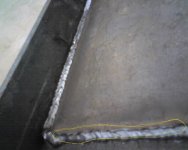
Last night, I fixed my broken plow point (cast steel) with a 220 stick machine using some very expensive hi-grade welding rods (MG Super 600) . Current setting was fairly low (80-90a) for the 3/32" rods. Up to this point, I was sure that MIG was the answer for me due to the ease of use but it was not appropriate for this repair, regardless of input voltage.
This suggests to me that I will need to re-think what I currently need and what I might need.
He does try to steer us towards the 220 machines unless you are sure you will never need that much power. Most machines can be dialed down to lower power requirements that cover most common material thickness (i.e. 24 gg) while small machines can only be dialed up to a fixed level (i.e. 3/16 - 1/4").
Last night, I fixed my broken plow point (cast steel) with a 220 stick machine using some very expensive hi-grade welding rods (MG Super 600) . Current setting was fairly low (80-90a) for the 3/32" rods. Up to this point, I was sure that MIG was the answer for me due to the ease of use but it was not appropriate for this repair, regardless of input voltage.
This suggests to me that I will need to re-think what I currently need and what I might need.