Working rail roads and their tracks.

   / Working rail roads and their tracks.
  • Thread Starter
#2,581  
Here is a video feartuering the Wyodak power plant and BNSF rail line just outside of Gillette WY. Drove past it 1000 times sicne I lived on the east side of the plant and needed to get to Gillette for work. Gee this brings back memoirs and I knew people who worked there. This powerplant has its own coal mine.

 
   / Working rail roads and their tracks. #2,582  
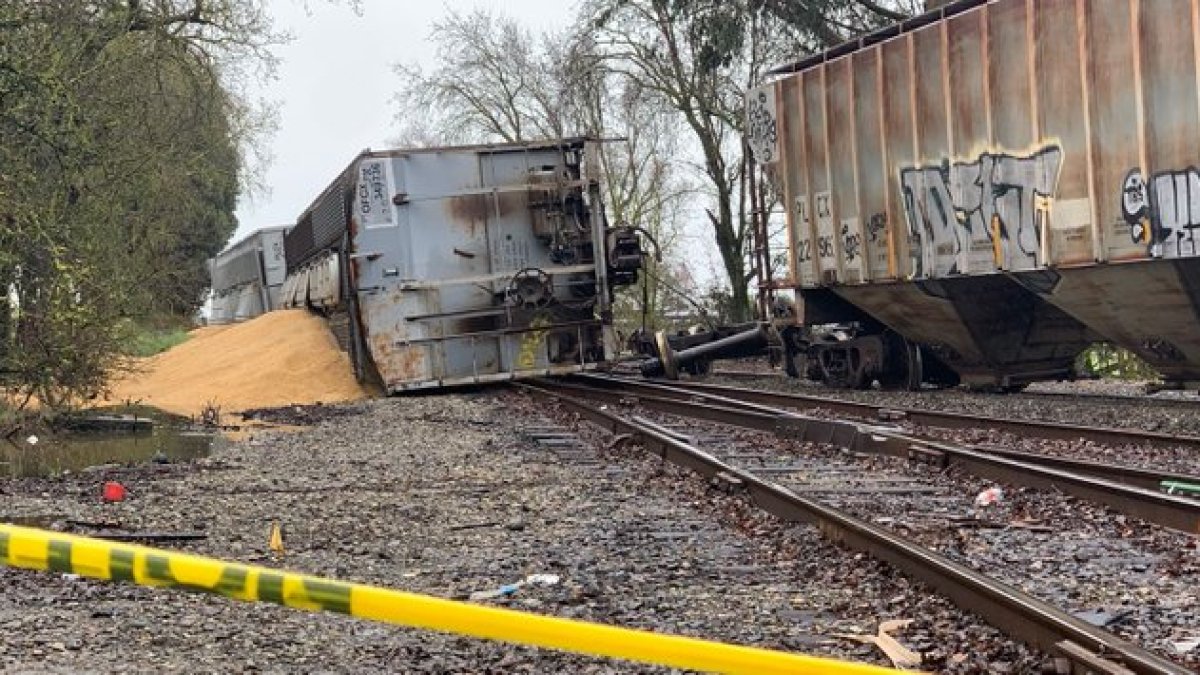
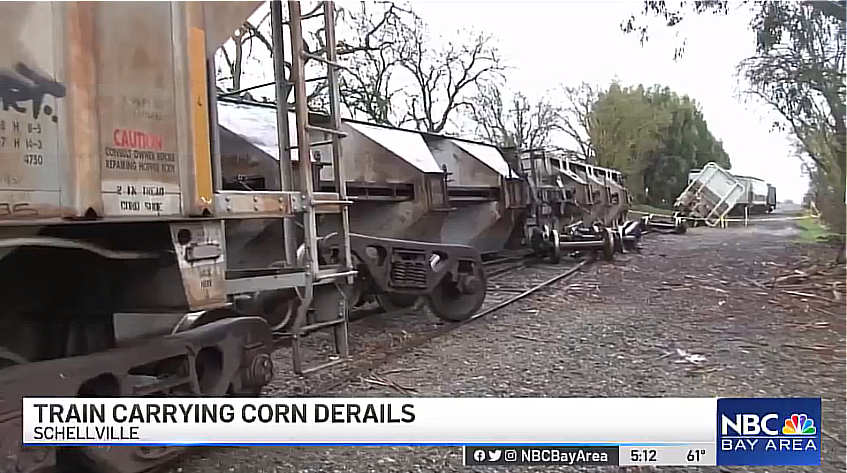
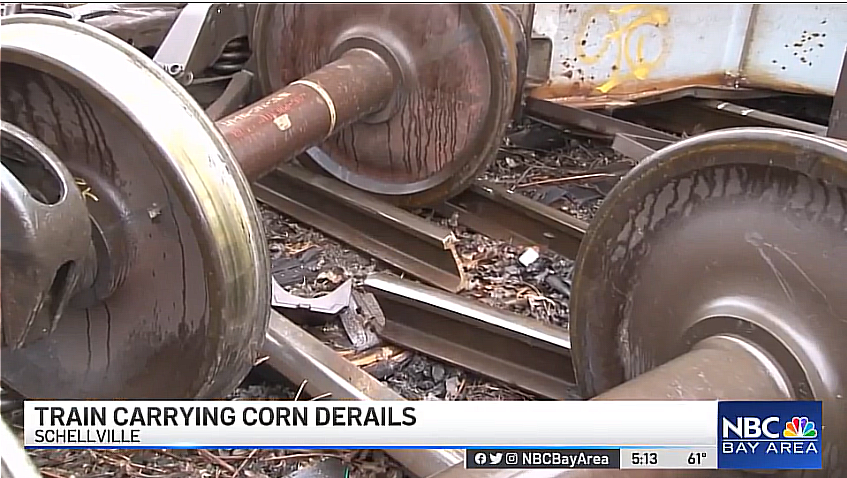
Here's what drew my attention to SMART recently. A news article said a couple of cars of feed grain flopped over while being moved slowly in their switching yard at Schelleville. (miles from their nearest passenger service). I found a railroader's discussion group saying lack of maintenance - based on their personal experience there - likely meant that rotten ties allowed the gauge to spread, dropping the car. Then continued pulling by the locomotive on a switch curve, pulled the cars over. Nobody injured.

And here's a site with photos. Looks like something related to lack of roadbed maintenance could be the cause.

Maybe this belongs in Hauling Something Wrong.

%D0%B8%D0%B7%D0%BE%D0%B1%D1%80%D0%B0%D0%B6%D0%B5%D0%BD%D0%B8%D0%B5_2023-03-20_150954890.png


%D0%B8%D0%B7%D0%BE%D0%B1%D1%80%D0%B0%D0%B6%D0%B5%D0%BD%D0%B8%D0%B5_2023-03-20_150833738.png


%D0%B8%D0%B7%D0%BE%D0%B1%D1%80%D0%B0%D0%B6%D0%B5%D0%BD%D0%B8%D0%B5_2023-03-20_151124367.png


I remember Schelleville because as a kid, before freeways, it was on the most direct route in the 100 mile trip to go visit grandparents. It's a couple of miles from the famous green hillside in Windows XP. Back then it was Southern Pacific's turnaround loop, the northern end of their San Francisco region service, where cars were handed off to Northwestern Pacific RR for the 300 mile run up to the NW California lumber mills.

Northwestern Pacific was more recently owned by a private investor who seemed to use it as a front for sucking federal and state subsidies to pocket for himself, instead of using the taxpayer funds to re-open fallen tunnels and replace track buried by landslides. I had a minor role in reviewing that owner's costs claimed for reimbursement. I see in the Wikipedia article that now, everything is abandoned with some of the locomotives and cars trapped in discontinous sections of the mountainous R of W, north of the section sold to SMART.
Wonder why taxpayer confiscated funds were distributed to a clown like that with no oversight? You would think we could do a basic accounting of where the funds were spent?
 
   / Working rail roads and their tracks. #2,583  
Wonder why taxpayer confiscated funds were distributed to a clown like that with no oversight? You would think we could do a basic accounting of where the funds were spent?
We did. Nuff said.

Subsequently ... the RW will likely become part of the State Parks system.
Wikipedia:
Financial disarray and legal troubles beginning before the turn of the millennium[22] have caused the North Coast Rail Authority to fall out of favor with state officials and the public,[23] who have moved to replace the length of the former railroad with pedestrian trails.[24] California's 2018 Great Redwood Trail Act includes detailed plans for investigating and resolving the Authority's debts, dissolving the NCRA, and converting its rights-of-way to rail-trail.
 
   / Working rail roads and their tracks. #2,584  
We did. Nuff said.

Subsequently ... the RW will likely become part of the State Parks system.
Wikipedia:
Guess the “we did” it part was post mortem, because the funds went into the wrong places and the railroad was run into bankruptcy.
Have fun with your little trail. I’ll take a functioning railroad over that 24/7.
 
   / Working rail roads and their tracks. #2,585  
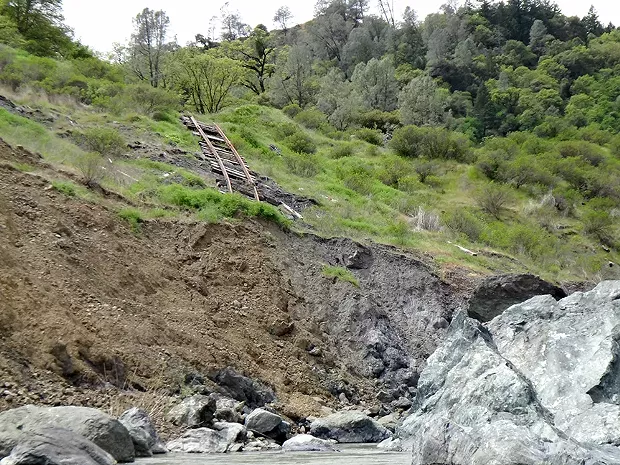
That North Coast region will never see rail again. There are no longer the lumber mills up north, that needed transport from there down to civilization. The route is 200+ miles of steep rough country, famous for earthquakes, and landslides due to the nature of the soil and heavy rainfall. So without a lot of transport revenue the maintenance costs are overwhelming.

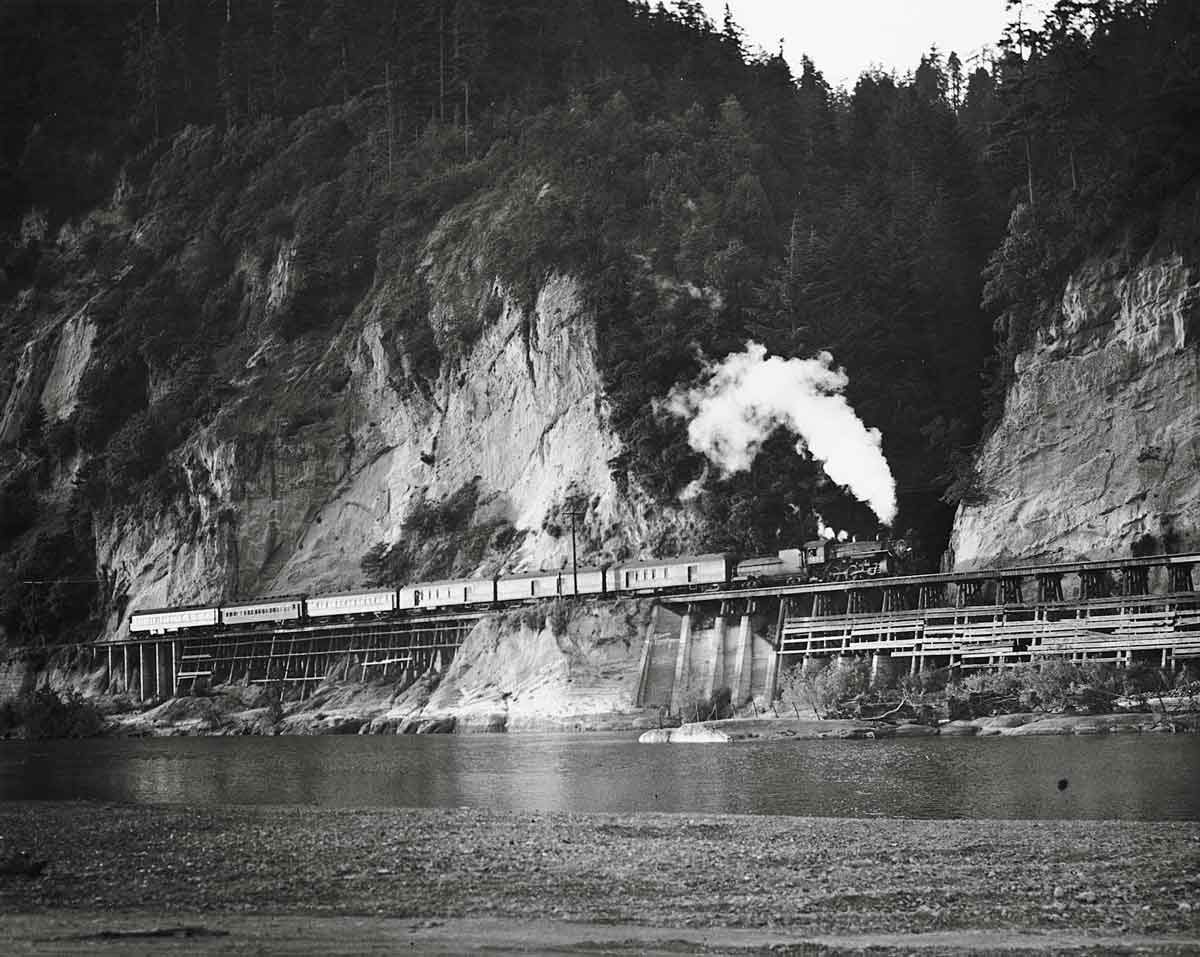
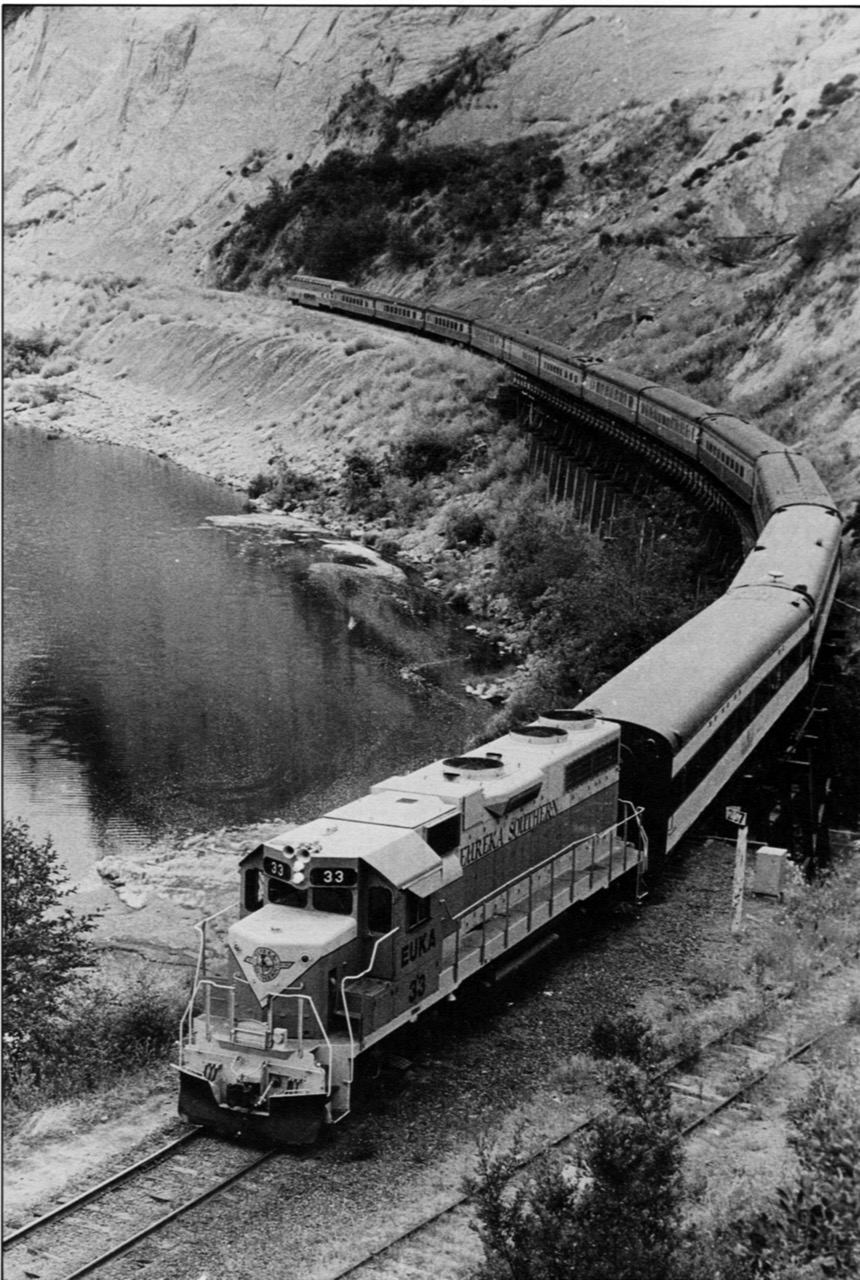
Back in its last days, lobbying from the people around Eureka who wanted to be connected to civilization caused the legislature to try various ways to keep it operating. It's my unfounded impression that that last clown came along and said just let me handle it. But like others, he had disastrous floods, landslides, declining revenue, and pretty much nothing to show for it. I'm glad to see the state took it over, in effect they had already paid for it. That corridor is now more valuable as a tourism resource.

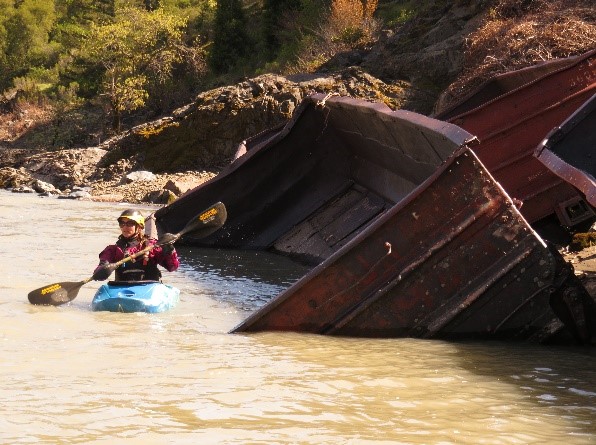
Here are some photos I found showing tourism value, and the rough terrain.

166258.jpg


20190117.jpg


HISTORY1.jpeg


HISTORY2.jpeg


ncra.jpg


Kayaker-and-legacy-cars.jpg
 
   / Working rail roads and their tracks. #2,586  
Beautiful country. Wife and I get a lot of use out of rails to trails.

Something I've noticed in my hobby of following railroad grades on google earth looking for roundhouses and roundhouse foundations is the number of redundant paths between major hubs.

Back in the late 60s they abandoned a line from South Bend in north central Indiana that went straight south to Indianapolis. There were 3 lines that went south out of here. All owned by different railroads. The other 2 eventually got abandoned as well. But if you look at it, about 18 miles to our east is a major rail yard. It's huge. And there are tracks there that go south and eventually hit Indianapolis. My wife's nephew operated trains on the line for a few years. Just yesterday my wife and I got stopped by a train on that track.

It also interfaces with about half a dozen east-west routes that cut across northern Indiana.

So the paths are still there. They may be longer, but they are no longer redundant, and in the big picture of things, that's more efficient. Railroad consolidations and closures made the redundant routes abandoned.

As for lots of factories with spurs that are no longer used, rail is only efficient for bulk. Trucking is better for those companies in the long run if they can't fill or use multiple cars of bulk product.

When I used to work at the newspaper, we got almost all of our paper by rail to a warehouse on the outskirts of town. We had a full-time employee that would unload box cars, load the warehouse, load rolls onto our semi, and drive 6-7 loads of paper over to our downtown printing location every day. We used about 30-35 rolls per day. We used about 3-4 box cars per month. As our circulation dropped over the decades, as all newspapers have, we got down to 1 box car per month. It had to be orders many months ahead of time, we were the only customer on the spur, the rails were in great disrepair, and it was cheaper and faster to just order multiple semi loads from the mills VS 1 box car. One of the reasons was a volatile market and we could order less bulk on trucks when prices were high and more bulk on trucks when they were low. Full boxcars months and months ahead of when you need it doesn't allow you to take advantage of those quick market price swings.

I can only imaging the same thing applies to other industries. Time VS bulk VS price VS other variables means for smaller factories, trucking is more economical than rail.

We also have to remember that rail was king until well after WWII. The national highway system that Eisenhower built likely opened up the market to competition between rail and trucking. Just like rail did in canals, trucks did in rail to some extent, other than massive bulk shipments.
 
   / Working rail roads and their tracks.
  • Thread Starter
#2,587  
That North Coast region will never see rail again. There are no longer the lumber mills up north, that needed transport from there down to civilization. The route is 200+ miles of steep rough country, famous for earthquakes, and landslides due to the nature of the soil and heavy rainfall. So without a lot of transport revenue the maintenance costs are overwhelming.

Back in its last days, lobbying from the people around Eureka who wanted to be connected to civilization caused the legislature to try various ways to keep it operating. It's my unfounded impression that that last clown came along and said just let me handle it. But like others, he had disastrous floods, landslides, declining revenue, and pretty much nothing to show for it. I'm glad to see the state took it over, in effect they had already paid for it. That corridor is now more valuable as a tourism resource.

Here are some photos I found showing tourism value, and the rough terrain.

166258.jpg


20190117.jpg


HISTORY1.jpeg


HISTORY2.jpeg


ncra.jpg


Kayaker-and-legacy-cars.jpg
Those are really some nice pics. Thanks for posting them.
 
   / Working rail roads and their tracks. #2,588  
All of what is said is true, yet it seems the environmentalists continue to push for more railroads, whidle others are ripped ofr the ground.
 
   / Working rail roads and their tracks.
  • Thread Starter
#2,589  
Here is a great video showing bulk products, coal in this case being moved in the powder basin in eastern Wyoming. I lived in this area for 4 years. Shows a shovel working in the Antelope mine removing over-burden and loading a 200 or 300 ton truck.
 
   / Working rail roads and their tracks. #2,590  
So when coal is outlawed, I wonder what will happen to all the great railroads that transported it?

I see a lot of jobs lost and a lot of abandoned rails….

Then rail fans will cry, “oh no….where did all the railroads go!!!“ :cry:
 
Last edited:
   / Working rail roads and their tracks. #2,591  
Here is a great video showing bulk products, coal in this case being moved in the powder basin in eastern Wyoming. I lived in this area for 4 years. Shows a shovel working in the Antelope mine removing over-burden and loading a 200 or 300 ton truck.
I took my wife and kids out to Montana and back many years ago. While in Wyoming, we drove around a couple of the huge coal mines. The drag line cranes, huge trucks, and train loading facilities were pretty amazing. The mines we drove around were south of Gillette, WY. We sat there and ate lunch while they loaded an almost continuous train with coal. Sights and sounds.
 
   / Working rail roads and their tracks. #2,592  
So when coal is outlawed, I wonder what will happen to all the great railroads that transported it?

I see a lot of jobs lost and a lot of abandoned rails….

Then rail fans will cry, “oh no….where did all the railroads go!!!“ :cry:
I look at it like this. When one technology wanes, another rises.

You might find this 2021 article interesting. At that time, coal made up about 11% of major railroad revenue. It made up 27% of it's tonnage. There's a nice breakdown pie chart that shows where railroads make their revenue.

I doubt trains will go away in our lifetimes.

 
   / Working rail roads and their tracks. #2,593  
I used to manage projects at an intermodal company. Ship to Truck to Rail or ship to rail was a major portion of their business.
 
   / Working rail roads and their tracks. #2,594  
I used to manage projects at an intermodal company. Ship to Truck to Rail or ship to rail was a major portion of their business.
I used to work for an intermodal company. I loaded army trucks and postal vans onto train cars from the AMGeneral plant in South Bend. Most of the old Army trucks came in by rail, were refurbished, then left by truck or were driven out of the factory to rail spurs around the area, loaded onto trains, and shipped out. That was early-mid 80's.

Interestingly, the current HUMMER plant in Mishawaka, IN (the next town over) does not have rail access. Everything is shipped in and out by trucks.

Our town has over 100 trains a day going through it. There's a major Norfolk Southern line and a major Canadian National (Formerly Grand Trunk and Western) line. They meet on one side of town, share some trackage and cross over in a 2 mile stretch, then separate on the other side of town. It's quite a busy rail corridor, and you see all kinds of stuff.

Interestingly, we see coal trains daily. Many times, full coal trains pass each other in opposite directions. So someone west is shipping coal east while someone east is shipping coal west.

Some it destined for power plants. Others for steel mills.

We also have an electric interurban train the goes to Chicago. The South Shore. It's a good way to commute to Chicago, and costs much less VS driving when you figure $ per mile it takes to operate your car and then add in parking fees. On weekends, and adult can take up to 2 kids for free. Very economical. I don't see that going away anytime in the near future.
 
   / Working rail roads and their tracks. #2,595  
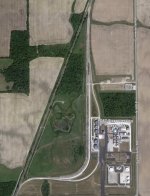
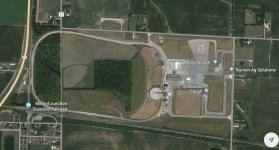
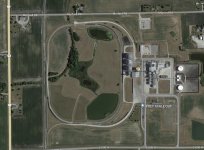
I was involved in the research and planning of a new poultry feed mill beginning about 10 years ago. Our old mill and its rail siding could only take 10 hopper cars of corn at a time. We got the “single“ car rate from CSX. About $3600 per car, Midwest to NE Georgia. Basically $1.00 per bushel of corn. We used around 50 cars a week or 160,000 bushels at that time.

The proposed new mill with a 1.5 miles of loop siding could take
90 -120 car unit trains. Freight cost was about $2,300 per car or $0.65 per bushel. The simplest justification for a new mill was that the railroad would pay for the new $30 million mill in 10 years or so.

162,000 x $.35 x 52 = $2,948,400 savings per year.

The new mill opened in 2021. I was retired by then thankfully 😅.


1679410687582.jpeg

1679410709395.jpeg
 
Last edited:
   / Working rail roads and their tracks. #2,596  
I was involved in the research and planning of a new poultry feed mill beginning about 10 years ago. Our old mill and its rail siding could only take 10 hopper cars of corn at a time. We got the “single“ car rate from CSX. About $3600 per car, Midwest to NE Georgia. Basically $1.00 per bushel of corn. We used around 50 cars a week or 160,000 bushels at that time.

The proposed new mill with a 1.5 miles of loop siding could take
90 -120 car unit trains. Freight cost was about $2,300 per car or $0.65 per bushel. The simplest justification for a new mill was that the railroad would pay for the new $30 million mill in 10 years or so.

162,000 x $.35 x 52 = $2,948,400 savings per year.

The new mill opened in 2021. I was retired by then thankfully 😅.


View attachment 789688
View attachment 789689
There are three of those along that north/south line I was talking about between Elkhart and Indianapolis earlier. All pretty new. Two have the full loops. 1 is a partial.

2B61C1E0-D664-4885-9E39-EFE063BD14E4.jpeg 3ECBC9C7-5298-4F03-9602-FC25B841F5C4.jpeg EAB0DC88-6A85-4467-B5D8-6C0CF5F04293.jpeg
 
   / Working rail roads and their tracks. #2,597  
Thought you folks might enjoy this.

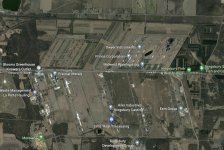
It's the Kingsbury industrial park. It was a munitions plant built for WWII, closed, and then reopened during the Korean War, I believe.

Tracks came in from the west then wishbones out on each side. Down each row were small buildings where they stored the munitions. They kept them separated in case of, well, BOOM!

I believe there were 4 large munitions assembly buildings. Maybe 8. The texts of history are confusing.

In the upper right of the photo you can see some of the buildings are still there. All kinds of smaller companies in there now, but most of the original buildings are long gone.

To the left of the photo is a huge recreation area. Hunting and fishing, a rifle range. And there are contaminated areas where munitions are still found to this day. There are bunkers in the woods. Not too many left anymore, but there were a lot when I was a kid in the 60s and 70s.

48220FB1-60EC-4E6F-920B-D8FB4C2B6252.jpeg

 
   / Working rail roads and their tracks. #2,598  
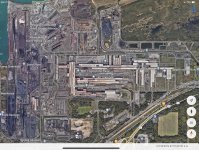
Somewhat related: Cleveland Cliffs Steel bought the 2 steel mills near me. They were both owned by Lukens Steel until about 20 years ago. 20 years ago they were purchased by Arcellor Mittal. Arcellor Mital sold to Cleveland Cliffs.
Both mills now American owned again, producing the widest & thickest steel plate in North America.


East Penn’s biggest customer is the Cleveland-Cliffs Steel mill. They bring them scrap steel which is melted into new steel. They also ship-out the finished steel to customers and ports.
 
Last edited:
   / Working rail roads and their tracks.
  • Thread Starter
#2,600  
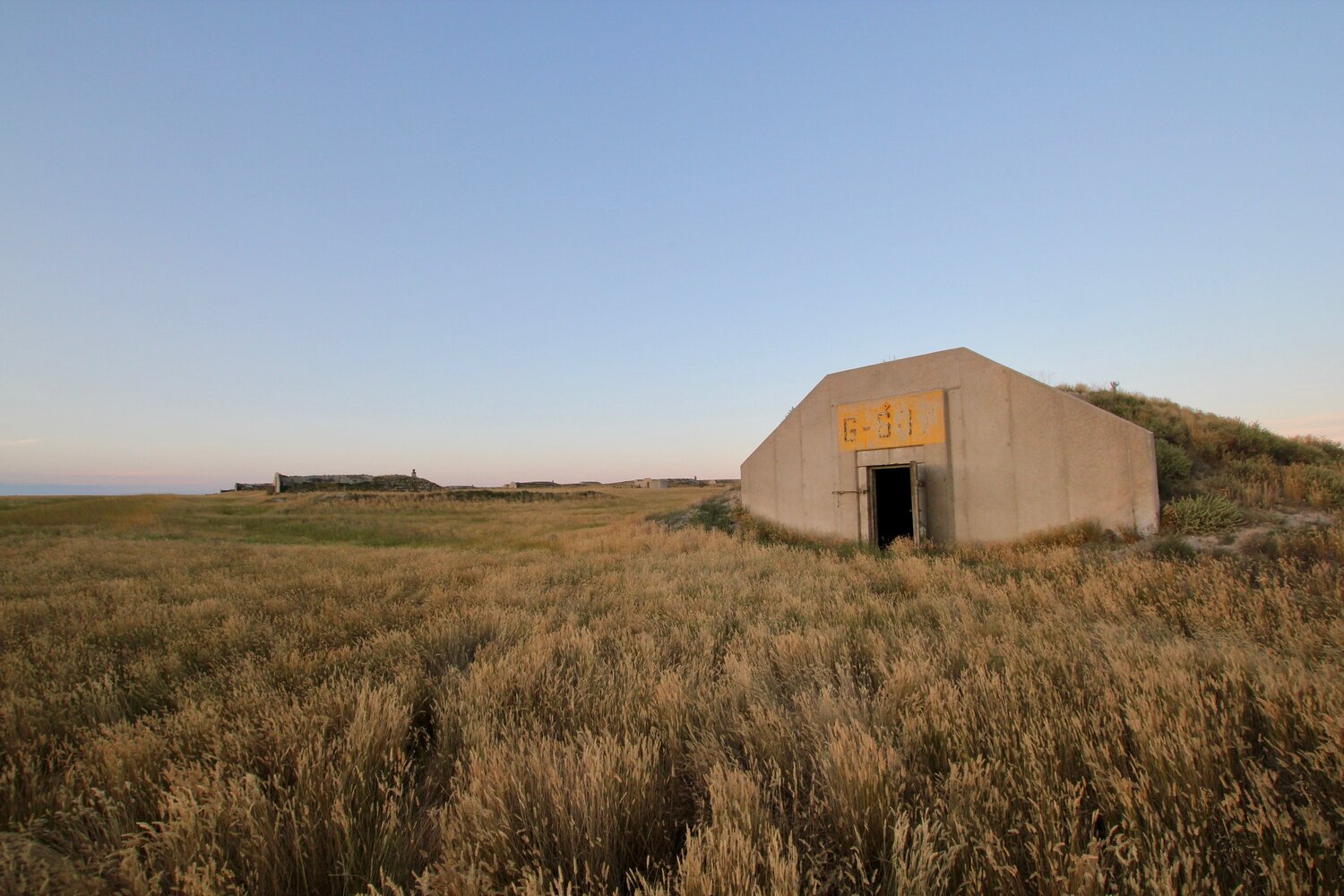
My first carmen job was at Igloo SD a retired WWII munition storage facility. They had buildings, overhead cranes and lots of tracks there. Some of the buidings in these photos I worked in. This is located along BNSF double main line abnd when I resided there, had a full train pass there every 20 minutes..


or


Marketplace Items

500 BBL FRAC TANK (A58214)
500 BBL FRAC TANK...
Rooster Weathervane (A59231)
Rooster...
207281 (A52708)
207281 (A52708)
500 BBL FRAC TANK (A58214)
500 BBL FRAC TANK...
2011 Freightliner Cascadia 113 S/A Day Cab Truck Tractor (A59230)
2011 Freightliner...
Club Car Carryall Electric Utility Cart (A55851)
Club Car Carryall...
 
Top