Working rail roads and their tracks.

/ Working rail roads and their tracks.
  • Thread Starter
#2,761  
What a balancing act!
A large construction crane sits on a partially constructed railroad trestle; can you spot the tunnel visible in the background?
This was the Pacific Coast Extension of the Chicago, Milwaukee & St. Paul Railroad through Montana and Idaho. It shows the erection of the Clear Creek bridge or viaduct along Loop Creek in Shoshone County, Idaho, close to the Montana border. It probably was photographed by Harry English, sometime between 1908 and 1911.
341861349_257677756689288_152512011562877248_n.png
 
/ Working rail roads and their tracks. #2,762  
Whole lotta nope to get me out on that. 🙃

I do a man-lift at work once in a while. Do not enjoy it, but it's my job, so I do it.
 
/ Working rail roads and their tracks. #2,763  
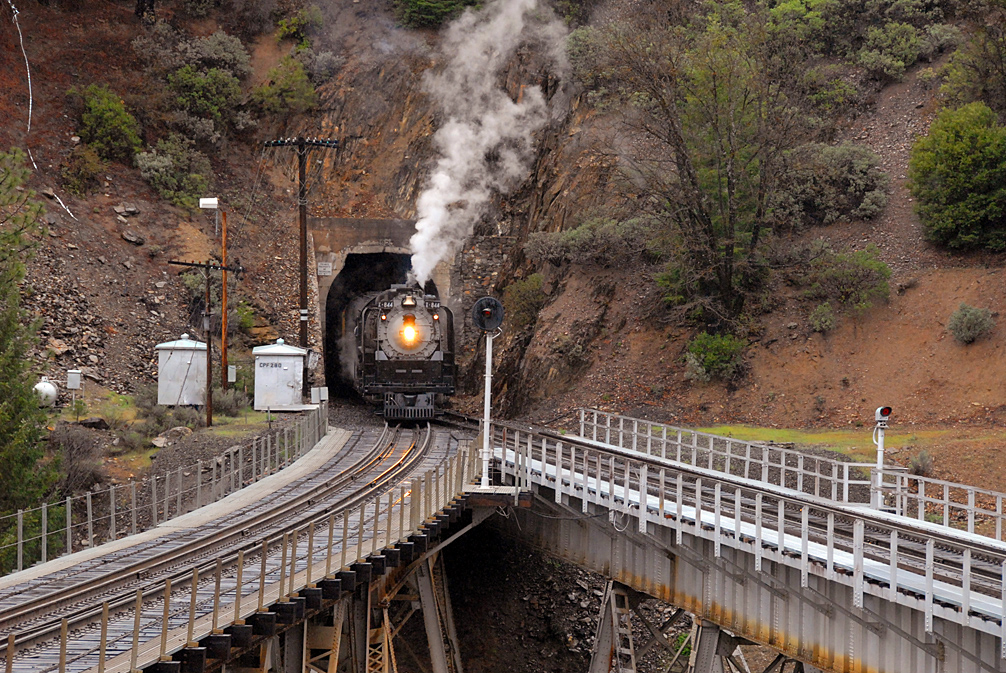
ALCo PA in the Columbia River Gorge


Bruce
 
/ Working rail roads and their tracks. #2,764  
ALCo PA in the Columbia River Gorge


Bruce
What's that third locomotive? Nickel Plate Road? I thought that was just history.
 
/ Working rail roads and their tracks. #2,765  
From:

Nickel Plate Road No. 190

"On March 2, 2023, it was announced that NKP 190 has been sold to Genesee Valley Transportation Company, Inc. (GVT Rail System) for final restoration and excursion train operations on their Delaware-Lackawanna Railroad Company, Inc. The locomotive was projected to make the cross-country journey from Portland, OR to Scranton, PA in the spring of 2023. The move returns the former Delaware & Hudson PA type No. 18 to home rails for the first time in more than four decades."

Bruce
 
/ Working rail roads and their tracks. #2,766  
Some railroad stories that are family legends: About 1930 Mom was a starving college student. She worked summers as a helper to wealthy families at their summer homes, where they hosted endless social events.

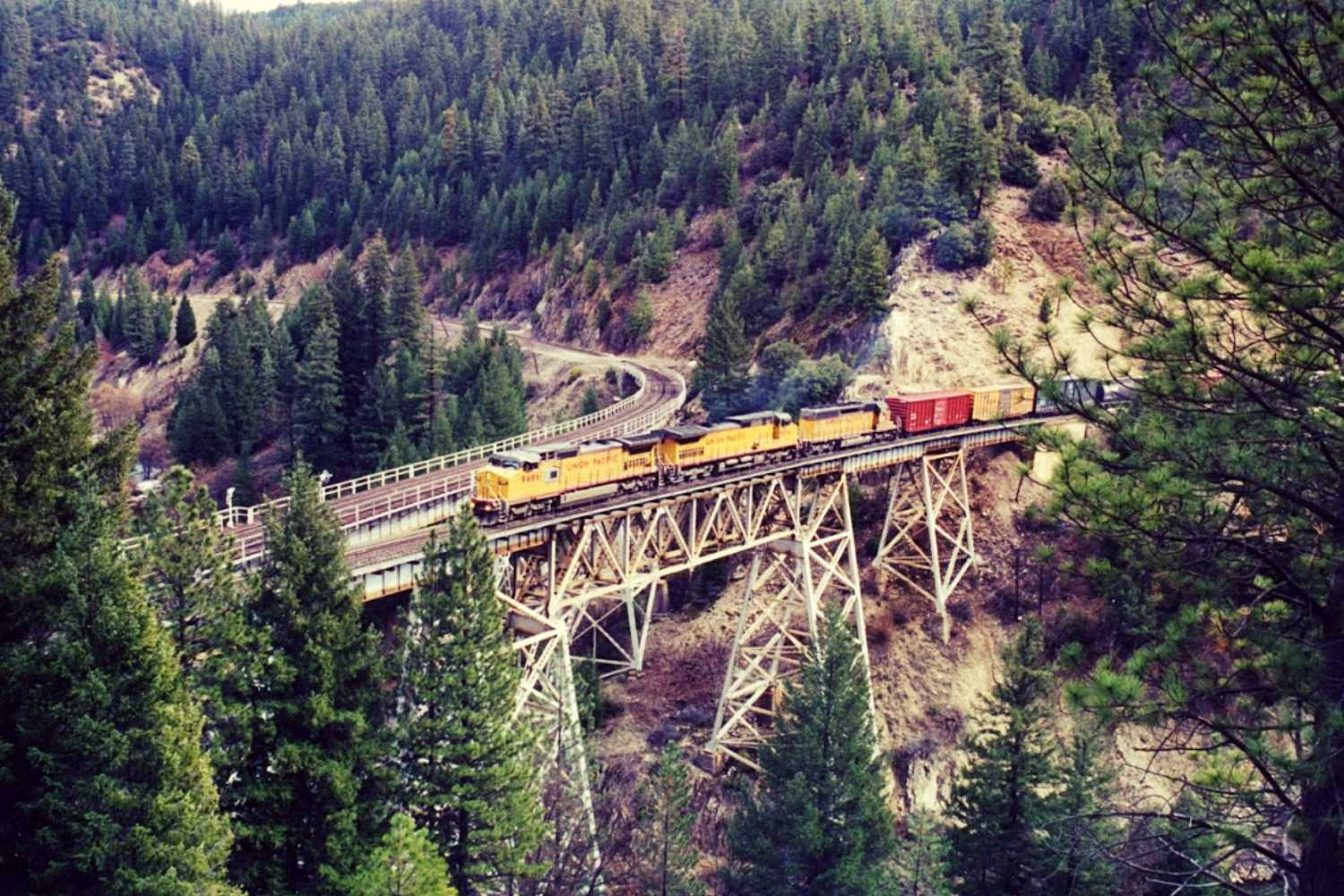
At Lake Tahoe one summer. Then one summer at Keddie, high in the Sierra Nevada range, where she assisted the wife of the chief railroad engineer who was building the Keddie Wye. This added a route north to Oregon and Seattle, to Western Pacific's West to East route over the Sierras. She had expected that the remote location would mean just helping with the family. But no, that family hosted railroad celebrities all summer long who came to see this marvelous engineering project.

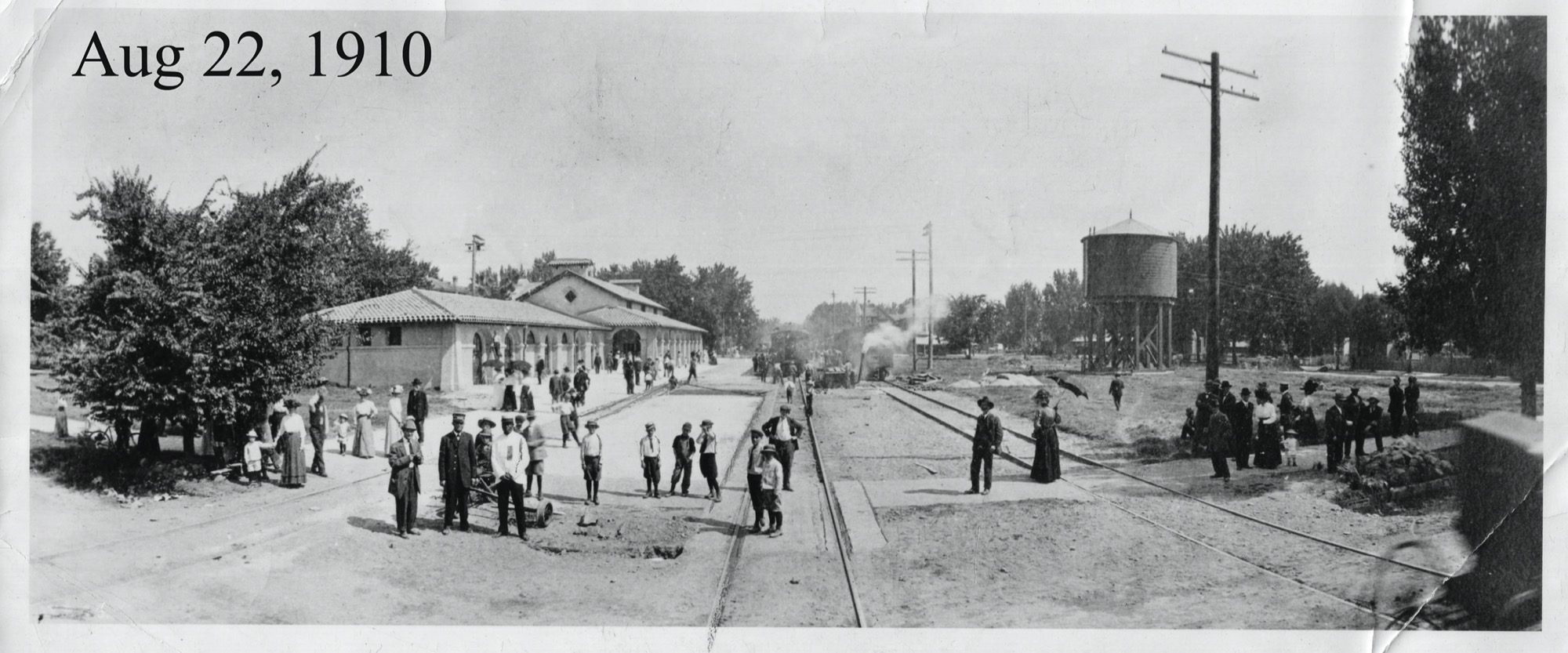
She told us Dad's father, too, her future father in law, had worked as a surveyor on the original west/east route over the Sierras that had opened in 1909.

I grew up a mile from Western Pacific's Sacramento roundhouse, active back then. Warm nights with windows open we could hear the crashing of railcars shunted in the switchyard south of there, as east/west trains were broken up to make north/south runs. Today the WP roundhouse site is a new subdivision.

840i4o589kfjk86829408439856.jpg


trains-in-feather-river-canyon-at-keddie-wye.jpg


Western-Pacific-1910-arrival.jpg
 
/ Working rail roads and their tracks.
  • Thread Starter
#2,767  
While it is a short jaunt from Duluth, MN to Superior, WI today, it was quite the process prior to April 23, 1987. Before the original Interstate Bridge connected the two cities travel required a ferry - something that was impossible to operate in the winter. The bridge connected Connor's Point in Wisconsin and Rice's Point in Minnesota. Rice's Point today is a popular spot to watch trains.
337398070_1446881935844819_5281193786186507620_n.jpg
 
/ Working rail roads and their tracks. #2,769  
What a balancing act!
A large construction crane sits on a partially constructed railroad trestle; can you spot the tunnel visible in the background?
This was the Pacific Coast Extension of the Chicago, Milwaukee & St. Paul Railroad through Montana and Idaho. It shows the erection of the Clear Creek bridge or viaduct along Loop Creek in Shoshone County, Idaho, close to the Montana border. It probably was photographed by Harry English, sometime between 1908 and 1911.View attachment 797253
That's now a bike trail. I'm not much of a cyclist but rented a bike and rode that about 7-10 years ago.
 
/ Working rail roads and their tracks. #2,771  
Slash, I just had to add this:
 
/ Working rail roads and their tracks. #2,772  
/ Working rail roads and their tracks.
  • Thread Starter
#2,774  
This 1927 photograph displays a sign commemorating a record in the largest number of miles of track built in one day during the construction of the Transcontinental railroad.

In the run-up to the meeting between Union Pacific and Central Pacific at Promontory Point, 155 years ago tomorrow, Central Pacific built 10 Miles of track in a single day. Built by a mostly Chinese construction crew, this single day record brought the railroad to within 4 miles of Promontory Summit, Utah. Note, I love this history stuff.
343781062_3414251602161808_780815473665120986_n.jpg
 
/ Working rail roads and their tracks.
  • Thread Starter
#2,775  
Shop Scenes Saturday. UP 1218, an 1000 horsepower SW10, is outside of track 5 and is getting some fresh air during a generator change out. It will later re-enter the shop to have a rebuilt generator applied. Then it will be aligned and sent out to start and check. If all is well, it will be released for service. Photo by Warren Johnson. Not sure where this photo was taken, may be Duluth MN.
343776075_166010149437277_6007736896589258991_n.jpg
 
/ Working rail roads and their tracks.
  • Thread Starter
#2,777  
Neat video of pictures of the trans continental RR building. They say is was completed in 1904 which was not accurate, it was much earlier than that in 1869. Many more accuratecys that just that.
 
Last edited:
/ Working rail roads and their tracks. #2,778  
I'm not understanding why brakes on a few tankers, let's say in the middle of the train, would keep a derailment from happening. If, let's say for argument sake, a rail breaks and cars start to derail 10 back from the powerhead. At normal operating speeds, all cars after the first one hits the dirt will be skidding to a stop, weather there brakes were on or not. Of course as soon as as a two cars are separated, all train brakes go on max.
As I understand it, the problem is that rail car breaks use one pneumatic hose, they lower the pressure to apply the brakes, then bump the pressure back up to release them, the hose goes through a tank on each car and so to release all the brakes the locomotive has to bring all the cars back up to pressure.
It takes time for the pressure drop to get from the engine back to the end of the train, the thought behind electric controlled pneumatic brakes is that all the brakes would start applying at the same time and they would all release at the same time.
The downside would be coming up with a connector that is tough enough to handle being disconnected abruptly like airlines are and easy enough to connect that it can only go in the right way and that will handle years of abuse.

Aaron Z
 
/ Working rail roads and their tracks. #2,779  
Neat video of pictures of the trans continental RR building. They say is was completed in 1904 which was not accurate, it was much earlier than that in 1869. Many more accuratecys that just that.
There are a lot of videos that show this history accurately!

This video looks like they gave a primitive AI app an assignment where it collected photos that seemed relevant, colorized them, then wrote nonsense narrative that was collected from those photos' captions. The narrative then repeats itself, word for word, starting about halfway through. Then at about the 2/3 point, no more narrative, just flipping through photos till the end of the vid. WTH? The narrative later correctly said the east/west segments met in 1869 while the very first sentence in the video says 1904.

One of the trains shown (the one coming out of a red-brick tunnel with 'bumpers' on the front corners of the locomotive) is clearly British.

Obviously nobody cared enough to 'proofread' what the AI assembled. I've read of fears that AI will make possible all sorts of bogus political statements etc. This is the first thing I've seen that appears to be a primitive example.


But alongside that vid was a link to an important one. An old UP safety video showing how to dismount a moving train safely. Well worth watching.
 
/ Working rail roads and their tracks.
  • Thread Starter
#2,780  
As I understand it, the problem is that rail car breaks use one pneumatic hose, they lower the pressure to apply the brakes, then bump the pressure back up to release them, the hose goes through a tank on each car and so to release all the brakes the locomotive has to bring all the cars back up to pressure.
It takes time for the pressure drop to get from the engine back to the end of the train, the thought behind electric controlled pneumatic brakes is that all the brakes would start applying at the same time and they would all release at the same time.
The downside would be coming up with a connector that is tough enough to handle being disconnected abruptly like airlines are and easy enough to connect that it can only go in the right way and that will handle years of abuse.

Aaron Z
I do understand the basic system since I worked as a carmen for years. But why these longer trains are are not being properly braked is my lack of understanding.
 

Marketplace Items

24220 (A56859)
24220 (A56859)
2004 CATERPILLAR 320CL EXCAVATOR (A60429)
2004 CATERPILLAR...
BUNDLE OF 2"X2"X14' TUBING (A60430)
BUNDLE OF...
2007 Heil Heavy Duty Aluminum Tank Trailer (A61306)
2007 Heil Heavy...
2019 CHEVROLET SILVERADO LD CREW CAB TRUCK (A59823)
2019 CHEVROLET...
2005 Chevrolet Impala Sedan (A56859)
2005 Chevrolet...
 
Top