Garage project

/ Garage project
  • Thread Starter
#22  
Too wet outside so I'll build in here a while. Rainy day sketchup.
 

Attachments

  • pipe.pdf
    217.3 KB · Views: 333
/ Garage project
  • Thread Starter
#23  
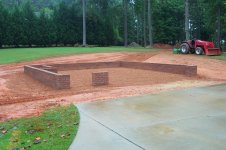
Good progress yesterday but rained out today. Foundation in, backfilled and graded. Plumbing rough in, termite treatment and pour the slab next week if the weather cooperates.
 

Attachments

  • DCP_2504.jpg
    DCP_2504.jpg
    389.3 KB · Views: 665
/ Garage project #24  
Interesting. I like the look of the brick on the inside. I haven't seen that before.

Will the slab tie into the walls? or will it float?

We build houses like this in California with the garage floor being poured after everything else was about done. I never understood why they did this, and I was too young to care or find out. Sometimes it was the last thing done, other times it was done after the roof was on or some part during the framing. I just figured it was a scheduling thing, but again, I never asked anybody.

I'm looking forward to your progress.

Eddie
 
/ Garage project #26  
BTW whitedogone, I caught a break this week with my foundation inspection. We have two building inspectors in our part of the county, one a twenty something that's known to be "a challenge" and the other a semi retired builder with 30 yrs experience. Luck of the draw I got the old man. Happy Days. He laid out the whole inspection cycle with milestones in a way I understood and can follow in 10 minutes.

I have to deal with inspectors on a weekly basis. They're just like everyone else-good and bad ones. The young ones are particularly entertaining. I built a house for one of the younger ones once who tried to tell me how I had to toe-nail with 16P nails a certain way he had dreamed-up while looking at the computer in his office.

Just for giggles I asked him to do a field demonstration for us and we all got a chuckle watching him take about 26 whacks (1/2 misses, 1/2 hits)at a 16P toenail that I beat in on 4 swings. Wasn't much wood left on the bottom of the stud. :D

Retired builders make great inspectors. They have a realistic sense of what's OK and what's not. The young ones that have something to prove usually have no concept of what's really going on.

'nudder funny story: We have a father & son building inspector team near us. Talk about a couple chuckle heads....the son's upstairs in my building trying to look at a widow rough opening pushes my plywood sheathing off the opening and it falls 2 stories down and clubs the old man on the head. Maybe that'll knock some sense into him...:D

The good ones are all retiring. Those guys are much appreciated.

Good luck on the garage.
 
/ Garage project
  • Thread Starter
#27  
There will be an expansion joint attached to the foundation walls where the pad butts but no fixed anchors, so it's probably correct to say the pad floats inside the walls. Most garages here are monolitic slabs and they work fine, I decided to go with a separate foundation with knee walls because it's more forgiving to grade to on the side of this hill and it matches my existing garage. BTW Eddie, your observation on the entry door rattled in my head till, as you can see by the photo, I bumped it to a 3'0". I'll thank you many times in the days ahead, but right now I'm still muttering. ;)

Pretty temperate here so no need to insulate under the slab. Plan to use a vapor barrier with wire, not much faith in fiber added to the mix. Many moons ago we used regular visqueen but time has proven that a poor choice. I plan to use a 10-15 mill product made for the task.
 
/ Garage project #28  
When I got my shop /garage built, I had the builder put in an additional 8" CMU block on the walls . The plans were for 9 foot walls, but with the blocks it gives me additional 8" ceiling heights. HE was using the CMU blocks for forming anyway so the additional block height was a low cost wall extension.
The interior walls and ceiling are insulated and finished with 3/8" plywood. The only downside, if you want to call it that, is there is a 3" ledge around the wall. I makes good storage area for small objects to set on rather than on the floor, like rakes, brooms small bottles etc. The CMU block allows me to hose out the floor without wetting my walls which was the original idea.
 

Attachments

  • Shop wall plate detail.jpg
    Shop wall plate detail.jpg
    454.8 KB · Views: 629
/ Garage project #30  
There will be an expansion joint attached to the foundation walls where the pad butts but no fixed anchors, so it's probably correct to say the pad floats inside the walls. Most garages here are monolitic slabs and they work fine, I decided to go with a separate foundation with knee walls because it's more forgiving to grade to on the side of this hill and it matches my existing garage. BTW Eddie, your observation on the entry door rattled in my head till, as you can see by the photo, I bumped it to a 3'0". I'll thank you many times in the days ahead, but right now I'm still muttering. ;)

Pretty temperate here so no need to insulate under the slab. Plan to use a vapor barrier with wire, not much faith in fiber added to the mix. Many moons ago we used regular visqueen but time has proven that a poor choice. I plan to use a 10-15 mill product made for the task.

Have you considered rebar? Of all the shops I've built (2 of them were my own) where we used rebar, there's been absolutely no concrete failure. What I do is set rebar on a 2' x 2' grid and drill the rods into the inside walls of the block. It hangs the slab off the inside wall. When you dug your footing trenches, you "overdug" them by perhaps a foot or so on the inside and outside. This area is now disturbed/soft and needs to be spanned with rebar, IMO, to insure it won's fracture. We compact both sides of the trench with a jumping jack, but still use rebar anyway.

My last shop was built partially on compacted fill. Even though I compacted it, I knew it would still settle slightly in spots. I used rebar and I able to park a 16 ton truck in my shop for the last 6 years without any cracks from settling.

The cost for rebar for your garage might be a couple hundred bucks and might save you from an unsightly settlement crack later.

Here's one of my shop floors 6 years later. Notice only the saw joint cuts.


Here's another I built with 2'x2' rebar grid in the concrete:

 
/ Garage project #31  
Builder - you need to come up this way and work, you would find tons of work after a year or two. They way you describe building things always sounds right to me.

As far as concrete in my building goes, the monkeys that did my slab in my pole building swore up and down that I didn't need control joints cut in my slab (28x40). I made them do it (I told them they didn't have to if they would sign an agreement to come back and fix all the cracks). I had slate fill, and had a 30 Ton roller compact it after the dozer had spread the fill and packed it, and it still settled some. I put 2b gravel over the slate fill and then had a concrete crew come in. My tractor with loader and whatever attachment park on it all the time. I have some cracks, but it still beats dirt.
 
/ Garage project #32  
Builder - you need to come up this way and work, you would find tons of work after a year or two. They way you describe building things always sounds right to me.

As far as concrete in my building goes, the monkeys that did my slab in my pole building swore up and down that I didn't need control joints cut in my slab (28x40). I made them do it (I told them they didn't have to if they would sign an agreement to come back and fix all the cracks). I had slate fill, and had a 30 Ton roller compact it after the dozer had spread the fill and packed it, and it still settled some. I put 2b gravel over the slate fill and then had a concrete crew come in. My tractor with loader and whatever attachment park on it all the time. I have some cracks, but it still beats dirt.

Thanks, my friend. :)

You know, anyone can pick apart anyone elses work, and I've never seen that more anywhere than here at TBN. :D Feels good to get a bone thrown to you once in a while.

If you really need to compact loose fill, try "puddling" sometime. If you have the time, the water settles all fill once and for all, but the time necessary and the mess usually isn't worth it. I use a jumping jack on the perimeter and a rammax in the middle. Run 'em twice as long as you think you should, be generous with the rebar, drill it into the walls, use exp. joint and you'll have no problems.
 
/ Garage project #33  
When I got my shop /garage built, I had the builder put in an additional 8" CMU block on the walls . The plans were for 9 foot walls, but with the blocks it gives me additional 8" ceiling heights. HE was using the CMU blocks for forming anyway so the additional block height was a low cost wall extension.
The interior walls and ceiling are insulated and finished with 3/8" plywood. The only downside, if you want to call it that, is there is a 3" ledge around the wall. I makes good storage area for small objects to set on rather than on the floor, like rakes, brooms small bottles etc. The CMU block allows me to hose out the floor without wetting my walls which was the original idea.

The only thing I would have done different that what you did is nail a seperate 2"x4" treated plate to the bottom of my studs, then placed it on top of the 2"x8" sill plate. I'd leave my concrete J bolts stick up about 3&3/4" for both plates. I've never seen studs nailed to the sill plates like that. I can only think it's adequate and meets code, just a little tougher to nail the bottom nails into 1.5" of plate rather than a full 3" of plates.
 
/ Garage project
  • Thread Starter
#34  
Rebar instead of wire is a thought. It'll add a little cost but could save a cracked floor. Think I'll try to find some performance data.

After I got done compacting my average thickness is closer to 5" than 4" at target height. I knew I was leaving it a little on the full side. Thought about adding more fill but decided to opt for 2 more yards of mud instead. The more the merrier.

Got a serious thunderstorm tonight, makes a mess in the red clay but sure helps settle the fill. I'll get back on it Wednesday running the perimeter with a full bucket. The center runs from 0 to +3" of fill over undisturbed red clay. R4's with a full bucket barely leaves a tread mark.

Semi confused about the vapor barrier now. Some say that here in the south if you're high and dry, the barrier does more harm than good by causing curing and finishing problems, but this is a concrete contractor that may not want to deal with the extended finishing time period a bottom sheet adds. I did not use crushed stone, rather a sandy clay and rock mix so I think I should use some form of barrier to control capilary action. Opinions from the learned please.

How deep does the saw cut need to be for an effective control joint?

I was a carpenter in a previous life. Sure will be glad to get past this brick and mud part.
 
/ Garage project #35  
That may by the case on your VB. Do concrete floors ever sweat down your way? It does make finishing harder and can lead to surface problems if your finisher doesn't deal with it correctly. Cut control joints are best, 1/4 of the slab depth should be fine.
 
/ Garage project #36  
Rebar instead of wire is a thought. It'll add a little cost but could save a cracked floor. Think I'll try to find some performance data.

After I got done compacting my average thickness is closer to 5" than 4" at target height. I knew I was leaving it a little on the full side. Thought about adding more fill but decided to opt for 2 more yards of mud instead. The more the merrier.

Got a serious thunderstorm tonight, makes a mess in the red clay but sure helps settle the fill. I'll get back on it Wednesday running the perimeter with a full bucket. The center runs from 0 to +3" of fill over undisturbed red clay. R4's with a full bucket barely leaves a tread mark.

Semi confused about the vapor barrier now. Some say that here in the south if you're high and dry, the barrier does more harm than good by causing curing and finishing problems, but this is a concrete contractor that may not want to deal with the extended finishing time period a bottom sheet adds. I did not use crushed stone, rather a sandy clay and rock mix so I think I should use some form of barrier to control capilary action. Opinions from the learned please.

How deep does the saw cut need to be for an effective control joint?

I was a carpenter in a previous life. Sure will be glad to get past this brick and mud part.

Some may disagree with this, but if I sense a prolonged curing time, or I just need the 'crete to dry fast because of impending freezing conditions, I "slit" the vapor barrier in a few spots. It lets excessive water drain-out but still works well as a vapor barrier after it is dry. I don't cut holes mind you, just slits. This will speed up finishing times.

The sand in your stone layer is not going to help. It will hold more moisture than desireable. Might be smart to wash the stone clean with rain/garden hose and get it down to the bottom of your stone if you have time. Then apply your vapor barrier.

I would still consider renting a jumping jack for the inside perimeter. The vibratory action is what settles the dirt unlike a loader tire. Unless you're broke, please use rebar. Drill it into the inside walls like I said.

I've been pouring slabs for 25 years an never had a major failure except for the times the customer got involved and was too cheap for rebar or wire, or wanted something "different", etc.
 
/ Garage project
  • Thread Starter
#37  
My existing garage floor will sweat once or twice a year when the humidity and temp change sequence gets just right. I was not there the day it was poured but seriously doubt it has a VB.

The slit idea sounds like a good compromise.

I like the rebar suggestion vs. wire and agree I should rent a jumping jack. My pour schedule has been pushed back till next week so I'll have time to tamp it good this weekend. How is the rebar supported, is there a device made for this or do I just lay it on a a 1/3 brick standing up?

I am a bit confused about drilling in the rebar. In my 8" double brick filled wall which is basically a solid column, would the drilled in rebar defeat the purpose of the expansion joint? Will the pad never expand more than it's poured dimension, only contract and return?

BTW thanks for all the help guys.
 
/ Garage project #38  
My existing garage floor will sweat once or twice a year when the humidity and temp change sequence gets just right. I was not there the day it was poured but seriously doubt it has a VB.

The slit idea sounds like a good compromise.

I like the rebar suggestion vs. wire and agree I should rent a jumping jack. My pour schedule has been pushed back till next week so I'll have time to tamp it good this weekend. How is the rebar supported, is there a device made for this or do I just lay it on a a 1/3 brick standing up?

Good judgement on the jumping jack. Once of prevention = pound of cure. It's a little late because all the fill is already in place. It's supposed to be done in "lifts" (layers), but it will still help a lot, just do it 3X as much as you think it needs to be done. Also, keep a firm grip on the JJ, don't let the plate hit your walls. It will loosen the brick/block from its' mortar joints in a heartbeat.

The rebar is supported by "chairs"-small wire supports that go under the rebar. They hold the bar up off the stone. You can also use brick batts just like you said, however, that does displace the concrete and will weaken that area so it's best to use chairs. They're only ~.50 c. ea.

I am a bit confused about drilling in the rebar. In my 8" double brick filled wall which is basically a solid column, would the drilled in rebar defeat the purpose of the expansion joint? Will the pad never expand more than it's poured dimension, only contract and return?

BTW thanks for all the help guys.

You would nail your expansion joint to the wall at the height you want your concrete, then drill a hole though the foam expansion joint about 6" deep into your wall. The rebar will theoretically "slide" in/out of the holes with the expansion/contraction of the concrete slab. Just drill the holes say 6" deep, but make the rebar go in the hole only 5"-5&1/2". That way the rebar has room to "grow".
 
/ Garage project
  • Thread Starter
#39  
More confusion. I got hold of what is said to be the best local concrete contractor in the area for commercial work who is also a licensed GC. I asked him about the rebar option and he advised against it, saying he has seen problems with this in 4" slabs, said it would telegraph through and checkboard and IHO should be used only in 6" or thicker. His advise was to use fiber or wire or both and strenghten the mix if still concerned. Said to use VB, finishing no problem if done correctly. Said two control joints each direction would be best but would put one ifI specified it that way. Seems to vary by region.
 
/ Garage project #40  
More confusion. I got hold of what is said to be the best local concrete contractor in the area for commercial work who is also a licensed GC. I asked him about the rebar option and he advised against it, saying he has seen problems with this in 4" slabs, said it would telegraph through and checkboard and IHO should be used only in 6" or thicker. His advise was to use fiber or wire or both and strenghten the mix if still concerned. Said to use VB, finishing no problem if done correctly. Said two control joints each direction would be best but would put one ifI specified it that way. Seems to vary by region.

That's a new one on me. 25 years and I won't pour concrete without rebar and I get no callbacks.

It won't "telegraph" through. :rolleyes: That's a good one. Just make sure your bar is 1/2 way or better below the top of slab.
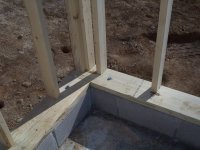
The ONLY way we would ever consider skipping rebar is if all the ground underneath was virgin naturally compact soil or it's just a vapor barrier under a crawlspace or a warm internal basement floor.
 

Marketplace Items

IRANCH 80CM TOOTHLESS BUCKET (A60736)
IRANCH 80CM...
2022 CORMIDI C85 STAND-ON MINI DUMPER (A62129)
2022 CORMIDI C85...
2016 Jeep Patriot SUV (A61569)
2016 Jeep Patriot...
2014 Bobcat T650 (A60462)
2014 Bobcat T650...
PT 1000 Gallon Supply Tank (A57149)
PT 1000 Gallon...
STORAGE FEES (A59906)
 
Top