Tig Welding Failure, what am I doing wrong

   / Tig Welding Failure, what am I doing wrong #1  

woodlandfarms

Super Member
Joined
Jul 31, 2006
Messages
6,149
Location
Los Angeles / SW Washington
Tractor
PowerTrac 1850, Kubota RTV x900
OK, my setup....

Scratch Start Tig
100% Argon
#6 Cup
Matheson Select 3.32 Blue Tip E3 Tungsten Electrode
Everlast PowerArc 200st
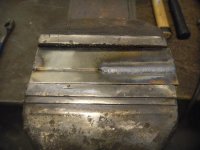
IMG_3635.jpg


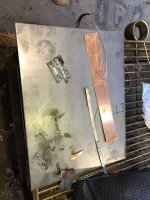
Setup for 16 Guage Mild Steel
25 Amps on Meter
15CFM on Argon

Results - A lot of burn through.
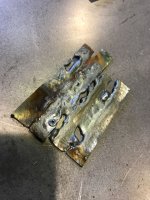
IMG_3636.jpg

Setup for 24 Guage Copper
20 Amps
15CFM

Results - Incineration. By the time I got a puddle I burned through. I tried laying some filler copper on top, see if that would help, torched right through.
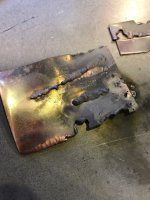
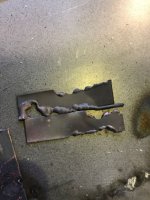
IMG_3637.jpgIMG_3638.jpg

While I am a beginner, I am not sure the issue is me. Maybe 20 Amps is too much for this stuff (WOO HOO I get to buy a real tig machine) but I think not. All the charts and while none I have found mention 24 guage copper, it seems to me that I need a lot more than 20 amps to make it happen.

Looking for any and all comments.
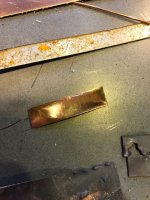
 

Attachments

  • IMG_3639.jpg
    IMG_3639.jpg
    61.9 KB · Views: 307
   / Tig Welding Failure, what am I doing wrong
  • Thread Starter
#3  
Negative to the torch, positive to the ground. It seems to spark right.....
 
   / Tig Welding Failure, what am I doing wrong #4  
Did you try upping the shielding gas flow? Also make sure it's actually flowing out the torch.
Had a problem a while back that ended up being a slightly lose adaptor on the regulator, drove me nuts for awhile until I found it when I replaced the regulator.

It was actually pulling air in and contaminating the shielding gas.
 
   / Tig Welding Failure, what am I doing wrong #5  
My PowerArc 200ST runs about 10 to 15-amps hotter than any of my other welders. I've never been very good at welding that thin of material:eek:. There was a time in my life where I thought 3/8-inch thick metal was sheet metal:D. I think something that thin, a foot pedal would come in real handy.
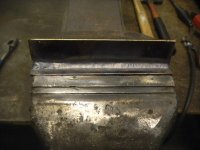
Here is some Tig welds I made with my PowerArc 200ST.
 

Attachments

  • Fillet LA on.JPG
    Fillet LA on.JPG
    125.5 KB · Views: 466
  • Lap LA off.JPG
    Lap LA off.JPG
    107.6 KB · Views: 419
   / Tig Welding Failure, what am I doing wrong
  • Thread Starter
#6  
Well, been doing a bit of reading. Going to try reverse polarity today. see how that works.

But in the end I think it is my wonderful and very powerful Everlast 200. I always felt that bad boy was hot, but with Shields comments I am now confirming that that little box is a great stick welder.
 
   / Tig Welding Failure, what am I doing wrong #7  
with Shields comments I am now confirming that that little box is a great stick welder.
Oh it is! I own some of the best welders ever made, and this little PowerArc 200ST is very impressive! :thumbsup::thumbsup:
 
   / Tig Welding Failure, what am I doing wrong #8  
I'm finishing a project using 16-gage steel tubing. I use a Thermal Arc 185 Arcmaster TIG with a #8 cup, gas lens, 3/32 2% lanthanated electrode (blue color code), and a 12 CFH flow rate with Lincoln ER70S-2, 1/16 filler rod.

The general rule for steel is 1 Amp / 0.001 inch of thickness. 16-gage steel is 0.0625 in thickness - meaning the starting setting should be around 62 Amps (maximum current level). I run my welder at 65 Amps maximum, but I have both a foot pedal and a finger tip control (TIG Button made by TIG Control) to control the arc, which in turn, controls the heat input to the metal.

What I have found with thinner metals, is that if you don't have a way to control the arc intensity, the metal rapidly overheats and - you burn a hole through it. Typically, I start the weld at nearly the full pedal (65 Amps) and when I get a liquid puddle, I back off and continue the weld at about 30-40 Amps. I also use a fairly rapid travel speed, and for some joints, setup the welder in pulse mode to lower the total heat input. The pulse mode I use is 90 Amps maximum, 40 Amps background, 33% on time, and 1.3 pulses / second.

Without a way to control the arc you're going to have a difficult time managing the heat input to the metal, and puddle versus travel speed. If you're attempting to control the heat through simply using a lower Amperage setting, without a foot pedal (or other arc control) the problem you will have is that you have to dwell too long in one place to build up enough heat to create a puddle. Essentially, you're heat soaking the metal, and then have no way to reduce the heat input, so you're burning a hole through the metal.

That's why it's important to start hot and then back off the arc current as the high level starting Amperage creates a puddle rapidly without heat soaking the metal. Once you have the puddle established you can back off the arc level as the steel heats up.

Without that kind of control, it's difficult to weld thin material.

I also have a theory that the steel today must be alloyed with Chinesium which has carbon inclusions that burn through rather than melting....but, that's just my theory.

I do know that 25 years ago, the steel tubing I was welding never burned through even at higher Amperage levels...hence the Chinesium theory....
 
Last edited:
   / Tig Welding Failure, what am I doing wrong #9  
Chinesium... funny! :laughing:
 
   / Tig Welding Failure, what am I doing wrong
  • Thread Starter
#10  
Yup, I hung up my scratch tig kit today. I reversed the Polarity, and while it spread out the heat, once the copper got hot it still just vaporized no matter how I moved. It is clear to me that the 20 amps my meter reads on my welder is more like 50.... There is probably some way to check this...

Anyway, I did tig on thicker metal, and it works pretty sweet. Slow as snot but I get it and I get how cool it could be.

The downside is that I am 100 in the hole on a scratch start tig system I will not use. The upside is that I see a nice tig rig in my future.... Tigging is pretty cool, I don't want to say easy but I get how it is an attractive way to weld.
 
   / Tig Welding Failure, what am I doing wrong #11  
Since you are trying to weld thin steel,,, and you have some copper laying around,
why not try putting the copper under the steel as a heat sink.

Although a lot larger, this was the same problem.
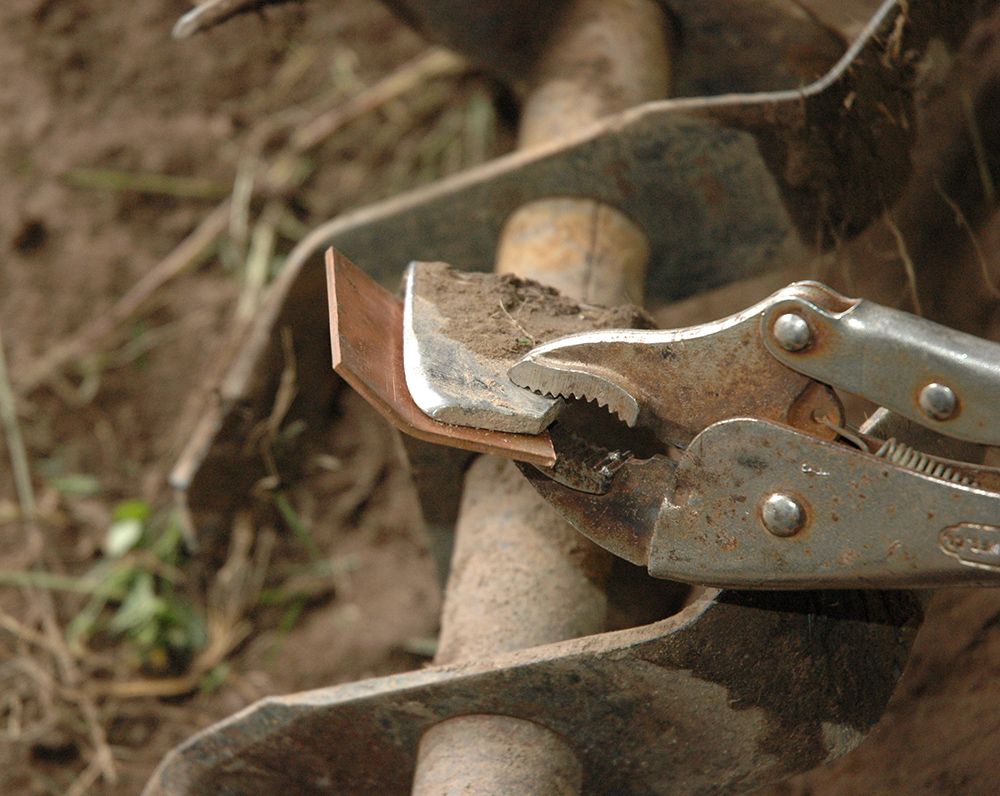
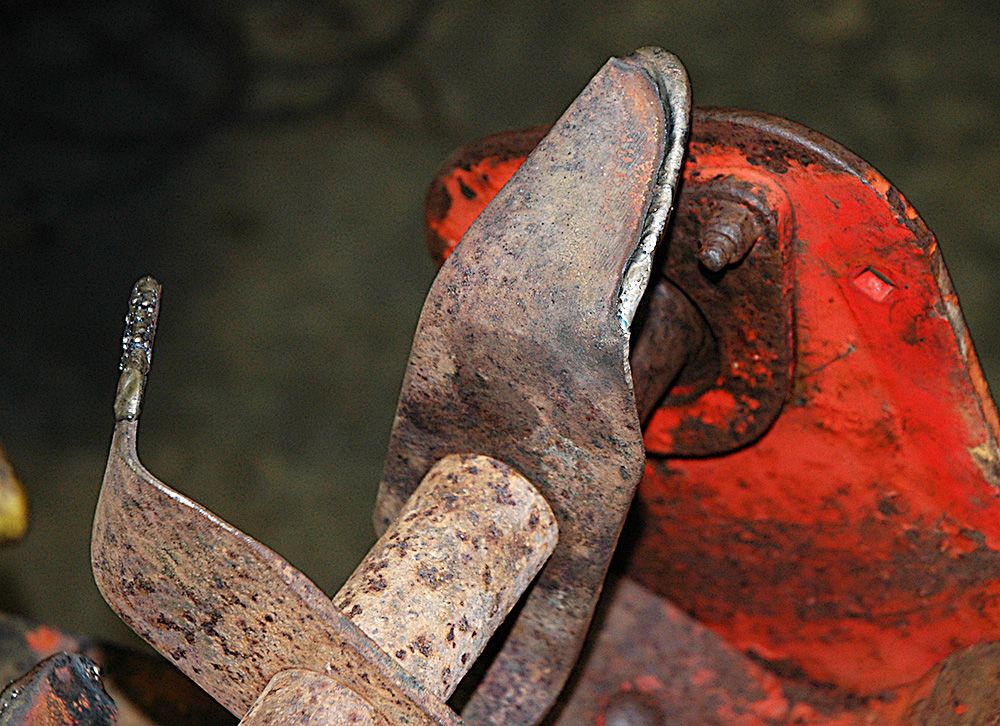
I wanted to abrasion resistant weld the edge of some tiller tines.
I clamped some copper under the tiller tine, and stick welded (1/8" rod)

Weld_zpsc70978d6.jpg


HardSurface_zps0f780313.jpg


I would avoid trying to weld copper until you master welding steel.
Copper can be VERY tricky to weld, especially if you do not have the machine completely figured out.
 
   / Tig Welding Failure, what am I doing wrong #12  
As a beginner, You may want to drop back to 1/16 tungsten. Mainly for the thinner stuff. without pulse or Hz adjustment you will see a little less trouble with the smaller tungsten. Then practice..
 
   / Tig Welding Failure, what am I doing wrong #13  
Yup, I hung up my scratch tig kit today. I reversed the Polarity, and while it spread out the heat, once the copper got hot it still just vaporized no matter how I moved. It is clear to me that the 20 amps my meter reads on my welder is more like 50.... There is probably some way to check this...

Anyway, I did tig on thicker metal, and it works pretty sweet. Slow as snot but I get it and I get how cool it could be.

The downside is that I am 100 in the hole on a scratch start tig system I will not use. The upside is that I see a nice tig rig in my future.... Tigging is pretty cool, I don't want to say easy but I get how it is an attractive way to weld.

If you have a DC tong meter or borrow one, You can clamp in on your ground and it will tell you true amp output.
 
   / Tig Welding Failure, what am I doing wrong #14  
Well, been doing a bit of reading. Going to try reverse polarity today. see how that works.

But in the end I think it is my wonderful and very powerful Everlast 200. I always felt that bad boy was hot, but with Shields comments I am now confirming that that little box is a great stick welder.
Reversing the polarity results on melting the tungsten like it is a stick rod. If you reversed polarity and it didn't melt the tungsten, then you may have some polarity problems with your machine. I think your machine is running much more amps than indicated, 20 amps should allow you to weld any sheetmetal without burning thru. I wouldn't use a #6 cup with 3/32 tungsten, get at least a #8 or even a #10 so you get better gas coverage without the gas blowing out like an arc gouger. When outside welding even in still air I always ran about 20 CFM or more on my TIG torch but I was not buying the gas. Also look at getting a Gas Lens and cup rather than the standard collet body. The same collets will work with the gas lens but you need a different cup.
 
   / Tig Welding Failure, what am I doing wrong
  • Thread Starter
#15  
I will pick up a smaller tungsten and a different cup. and yes, the gas is sounds like a jet engine sometimes.

As for running reverse polarity, it did ball up the tungstend for sure but it provided a different arc. Still too strong

And I will continue with scratch start. I am just bummed that this did not work for thin stuff.

question to all, why do you tig thicker metals? What does this process provide that is not in MIG? I am assuming a cleanliness in the weld and its slow pace allows for a higher quality weld but....
 
   / Tig Welding Failure, what am I doing wrong #16  
I only Tig weld fairly thin, or small objects. I Tig weld most aluminum, but I do have a spool gun for thicker aluminum. For large projects I use my Mig / wire feeder.
 

Attachments

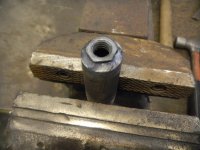
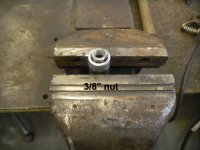
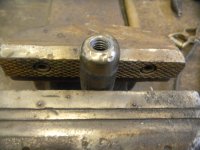
  • Nut 1.JPG
    Nut 1.JPG
    398.1 KB · Views: 200
  • Nut 3.JPG
    Nut 3.JPG
    138.2 KB · Views: 210
   / Tig Welding Failure, what am I doing wrong #17  
I only Tig weld fairly thin, or small objects. I Tig weld most aluminum, but I do have a spool gun for thicker aluminum. For large projects I use my Mig / wire feeder.

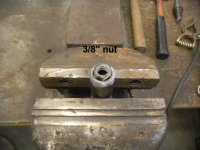
Did you put the 3/8" bolt in the nut when you welded that nut in to avoid any warpage of the threads or just do it free with no problems?
 
   / Tig Welding Failure, what am I doing wrong #18  
I Tig welded the nut just for an example. I also Mig welded one. Placing a bolt in the nut before welding is the way to go:thumbsup:, also could run a tap through the nut too.
 

Attachments

  • Nut 1.JPG
    Nut 1.JPG
    326 KB · Views: 176
  • Nut 3.JPG
    Nut 3.JPG
    106.2 KB · Views: 218
   / Tig Welding Failure, what am I doing wrong #19  
Sheild Arc; your welds are always a joy to look at.
 
   / Tig Welding Failure, what am I doing wrong #20  
Thank you very much Egon! But I'm just a hobby welder.;)
 

Tractor & Equipment Auctions

Honda EM3500S Portable Gasoline Generator (A59228)
Honda EM3500S...
2008 MOTIV ALUMINUM TRAILER CO. 32 TRI AXLE GOOSENECK ENCLOSED TRAILER (A58214)
2008 MOTIV...
9ft. Flatbed Truck Body with Gooseneck Connection (A59230)
9ft. Flatbed Truck...
2004 Saturn VUE SUV (A59231)
2004 Saturn VUE...
2022 Club Car Tempo Cart (A55852)
2022 Club Car...
1987 CATERPILLAR D6H HIGH TRACK CRAWLER DOZER (A59823)
1987 CATERPILLAR...
 
Top