Egon
Epic Contributor
Back blade with gage wheels and windrow back and till you run out of windrow.


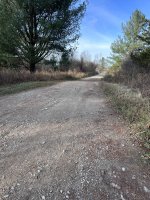
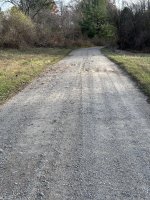
Part of the problem is when it was put in they did not remove enough of the organic material , it have a lot of pit run gravel up to 12” on most of it .
I have put lots of crushed concrete on it over the last few years .
It has gotten better after the kids moved out and the speeding through the puddles has stopped

The blade is mounted on hinged brackets which are bolted to the cross bar. It folds down and rests against the tines when in use. It folds up and is held by latches attached to the bracket when not inMan.... that's exactly what I want/need for my drive and other uses around the property. I've got an Everything Attachments (I got lucky and purchased back when they were reliable) offset/adjustable rock rake that's pretty much bomb-proof....
However, the cost of buying an aftermarket set of gauge wheels and grader blade for the rock rake are freaking ridiculous. One of these years, when the kids are gone, I'm going to get a welding rig along with the raw materials and fabricate the remaining parts I need. Even with the time spent learning I'll still be money ahead of purchasing pre-made.
How does the grader blade attach to the implement?
Well he said the dips are about 20 feet apart so I wouldn’t call that washboard. I believe the main problem is his tractors wheelbase is simply to short to do a real good job of grading those dips out and using a three point hookup boxblade hanging off the rear of his tractor makes the job nearly impossible. Boxblades work great for lots of other stuffWithout getting too technical; we first need to define "dips", and see what the cause is. Is it wash boarding, settling, erosion, or natural lay of the land/topography, wet areas?
Wash boards suck, and they will keep coming back over time, but can be fairly easily graded away. More cohesive material tends to not washboard as bad.
Settlement, there are lot of reasons/causes, but often, just scarifying the existing material and adding a few more tons is your best bet.
Erosion, can be somewhat dealt with by swales/ditches, cross slope/crown.
Wet areas are the hardest to deal with, but as much as it's Not the right answer, often the most effective, cheap way, is add additional material.
Topography, cut the highs, add to the lows.
Pictures help a lot. Those appear to areas that hold water. I would cut the grass shoulder down, to create "weep holes" and then scarify the low area, and add some material to it. I dont think the dips you are showing are the result of a short wheel base problem.

It appears that the road bed is lower than the surrounding ground. This will be difficult or impossible to keep shaped up because all of the drainage is into the road. The only real solution is to bring in more gravel to elevate and crown the road bed.Pictures help a lot. Those appear to areas that hold water. I would cut the grass shoulder down, to create "weep holes" and then scarify the low area, and add some material to it. I dont think the dips you are showing are the result of a short wheel base problem.
You mentioned that the subgrade may be organic or expansive; water sitting on it will certainly make the problem worse.
Picture 1 and 3, both appear to me, that you could cut a weep hole to the outside, and add material. It's always hard to get perspective though pictures though.It appears that the road bed is lower than the surrounding ground. This will be difficult or impossible to keep shaped up because all of the drainage is into the road. The only real solution is to bring in more gravel to elevate and crown the road bed.
If that is the case, elevating the road is not doing anything but being a temporary solution. You need to be looking at stripping, adding fabric and pit run, then putting road base back on.It appears that the road bed is lower than the surrounding ground. This will be difficult or impossible to keep shaped up because all of the drainage is into the road. The only real solution is to bring in more gravel to elevate and crown the road bed.
Actually we have elevated the road with just rock on many forest roads and these roads have held up for years. Fabric isn’t cost effective when you’re doing miles or thousands of feet of roads. Elevating and crowning the road is the key. Water will drain off the road.If that is the case, elevating the road is not doing anything but being a temporary solution. You need to be looking at stripping, adding fabric and pit run, then putting road base back on.
I had a quote for that and it was $80,000If that is the case, elevating the road is not doing anything but being a temporary solution. You need to be looking at stripping, adding fabric and pit run, then putting road base back on.
I would get a belly dump or two of rock spread along the road. Then use the rear blade on your tractor to shape it into a crown. That’s what I did. After a few loads, the road was elevated. Now it stays in good shape with just a few gradings each year. I do try to plow the snow so it doesn’t melt into the road bed. This shouldn’t cost more than $1500 or $2000 at the most.I had a quote for that and it was $80,000
I can add some stone every year and just deal with it
Wow, and honestly, your driveway not only looks better than my current drive, but also every drive I have ever lived at...I had a quote for that and it was $80,000
I can add some stone every year and just deal with it